Collaborative learning is a massive part of my classroom, but the collaboration doesn’t stop there. I rely on a lot of peers and resources to improve my teaching each and every day. Reflective practice is a huge part of my teaching, and through this reflection, I process different things I’ve picked up and think about how I can apply them to my teaching. Throughout this year, I’ve been able to create collaborative lessons, discover new resources, receive advice from peers, attend and hold rounds, and even attend the 2023 ATMIM “March Mathness” Conference.
Teamwork Makes the Dream Work
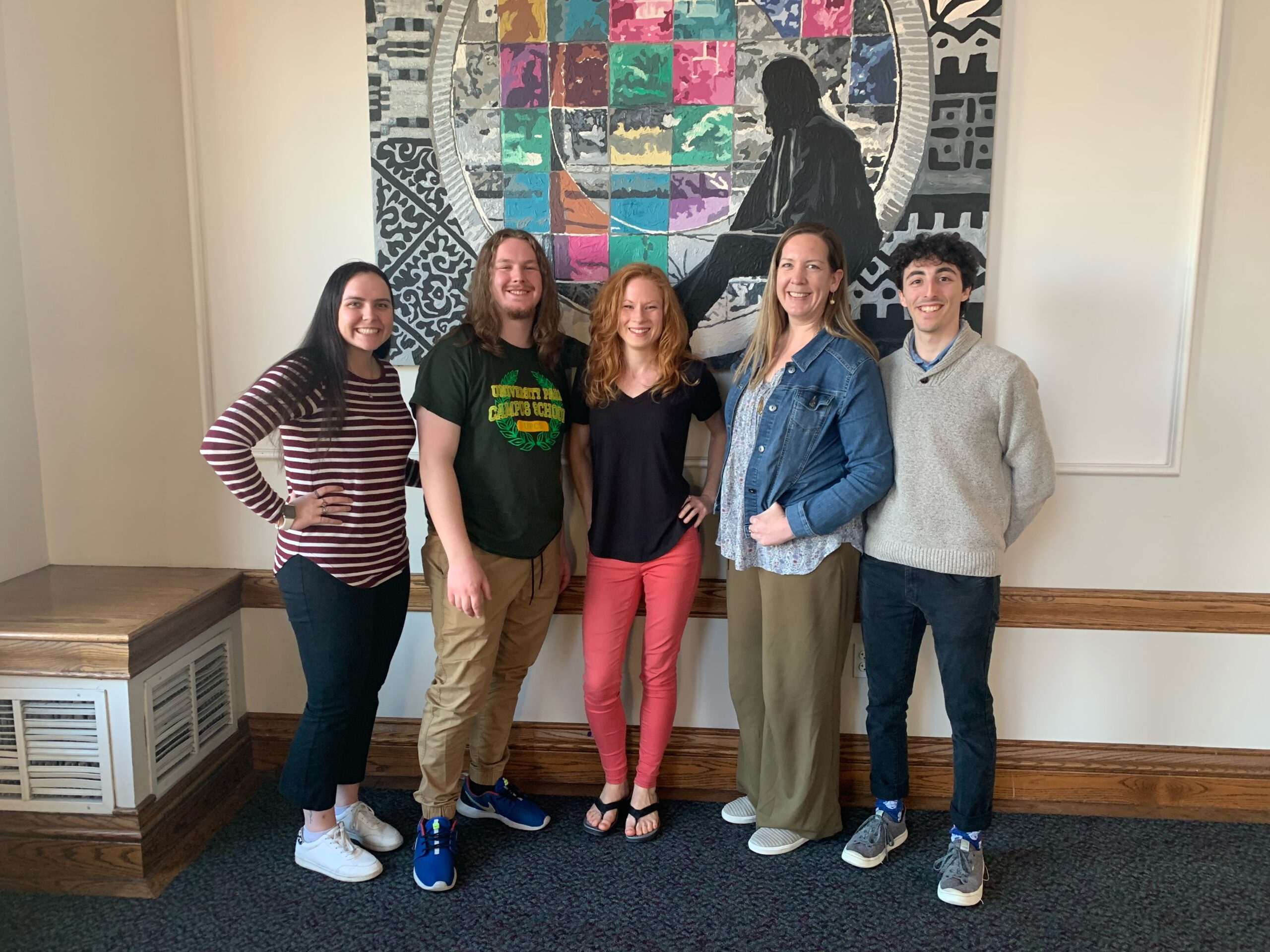
The 2022-2023 math MAT group! Left to right: Kaylee Gibson, me, Kyle Pahigian (our great leader!), Anna Dionne, Nathan Kapiloff
This year certainly has been a challenge, but it was all made possible by the amazing peers I have in the math cohort, Nathan Kapiloff, Kaylee Gibson, and Anna Dionne. Each member of this cohort was a vital part of my success this year. Being young teachers, we all have a lot to learn and figure out, so we all made sure to be there to support each other in any way we could. Nathan and I would spend late nights almost every night working together on improving each other’s lessons, rereading each assignment, making sure the flow seemed right, and finding new ways to relate it to real-world contexts. Nathan helped me develop a project I utilized in my second CUP – the packing project – which helped me really narrow down what I was looking for out of the project as an evaluation versus how I can make it fun and challenging. Having Kaylee as a resource for trying new things in the classroom and showing different activities was very beneficial for me, as well. Kaylee often would try something new in her class and tell me along with the others how they went and if she recommends trying them, which proved to be helpful in finding successful ways to teach in new, engaging ways. Anna’s been a teacher for a few years, and her professional advice and experienced thinking was very helpful for me in shaping a few assignments as well. As a complete group, we would always find new ways to change our lessons based on things we learned or read about in order to create the best classrooms possible. From the workshops with Mirko Chardin, we learned a lot about how to create more powerful lessons using UDL and culturally responsive teaching, which the four of us reflected on heavily as to how to improve the classroom going forward and immediately got to work in applying these new ideas.
A Peek into Different Disciplines
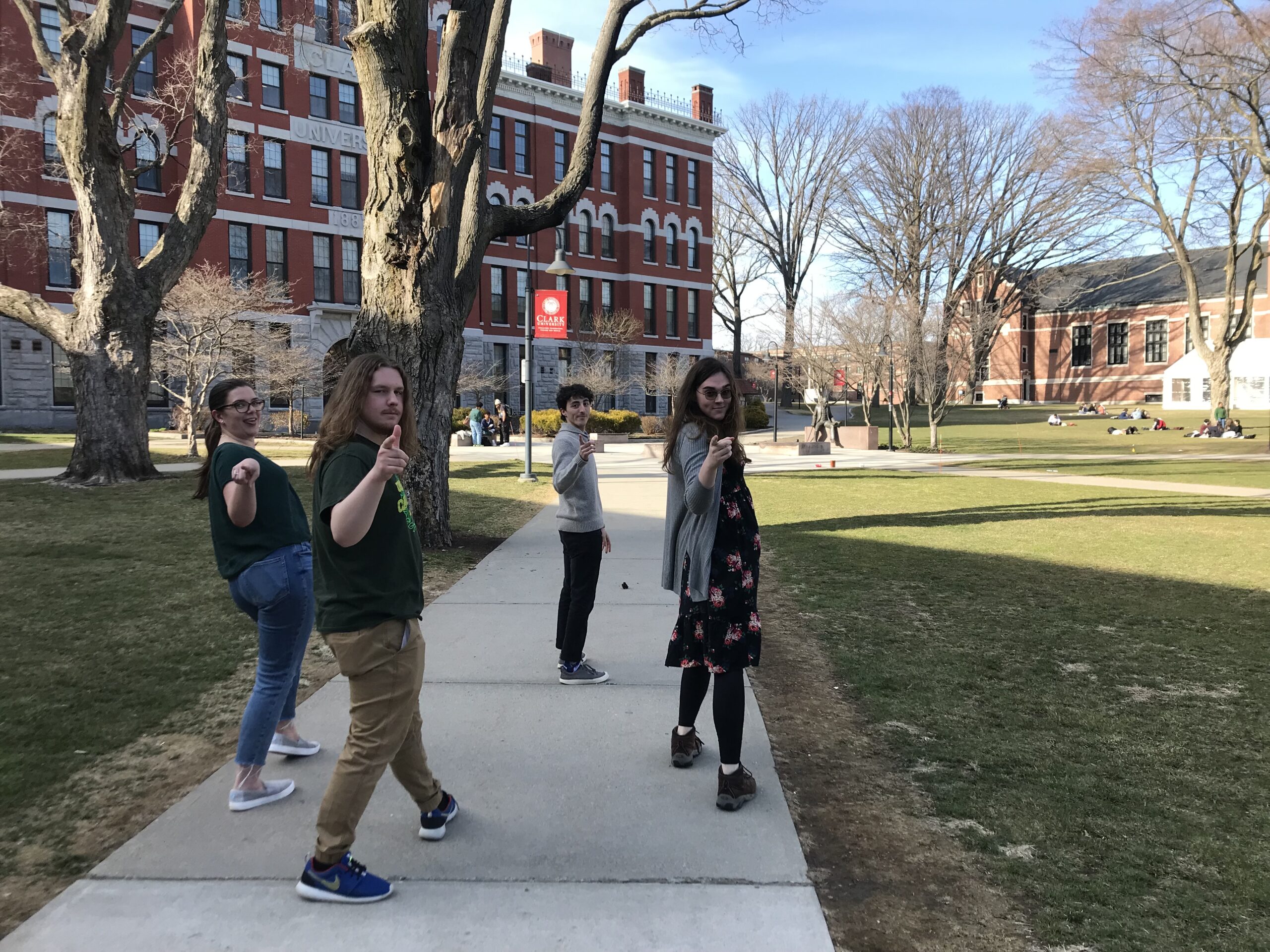
Some MATs and I going on a walk break! Some of these walks led to the creation of some of my best lessons, it’s wild what fresh air can do for you!
Through the round process in this program, I had the ability to attend a few different rounds across different disciplines to get a better glimpse of what teaching is like in other classrooms and see if anything is applicable to my teaching to create a more well-rounded classroom.
I went to see a math lesson in a fifth grade classroom at Jacob Hiatt early on in the year, which went over multiplying large numbers together using the area model. This was a really cool look at what math is like at a level much lower than the ones I teach. I took this into consideration when I approached multiplying polynomials in geometry, where I aimed at keeping vertical alignment consistent and utilized the area model as a scaffold to make the multiplication feel recognizable while pushing them to more challenging content.
I also went to a round for 10th grade history at UPCS, which had my geometry students in the class. This was really helpful for me to see how they interacted with different lessons and different subject-matter. The students seemed to be really engaged in the discussion-styled lesson that had students debating each other on their thoughts over social and political issues. The students were pushed to do their own thinking and then back it up with discussions and had the ability to change their mind. Following this round, I looked to find ways I could get student voices centered in debates and have them thinking critically through discussions to come to conclusions. I started making warmups and activities more discussion-focused to allow them the chance to build their own understanding and teach each other while also building mathematical discourse skills.
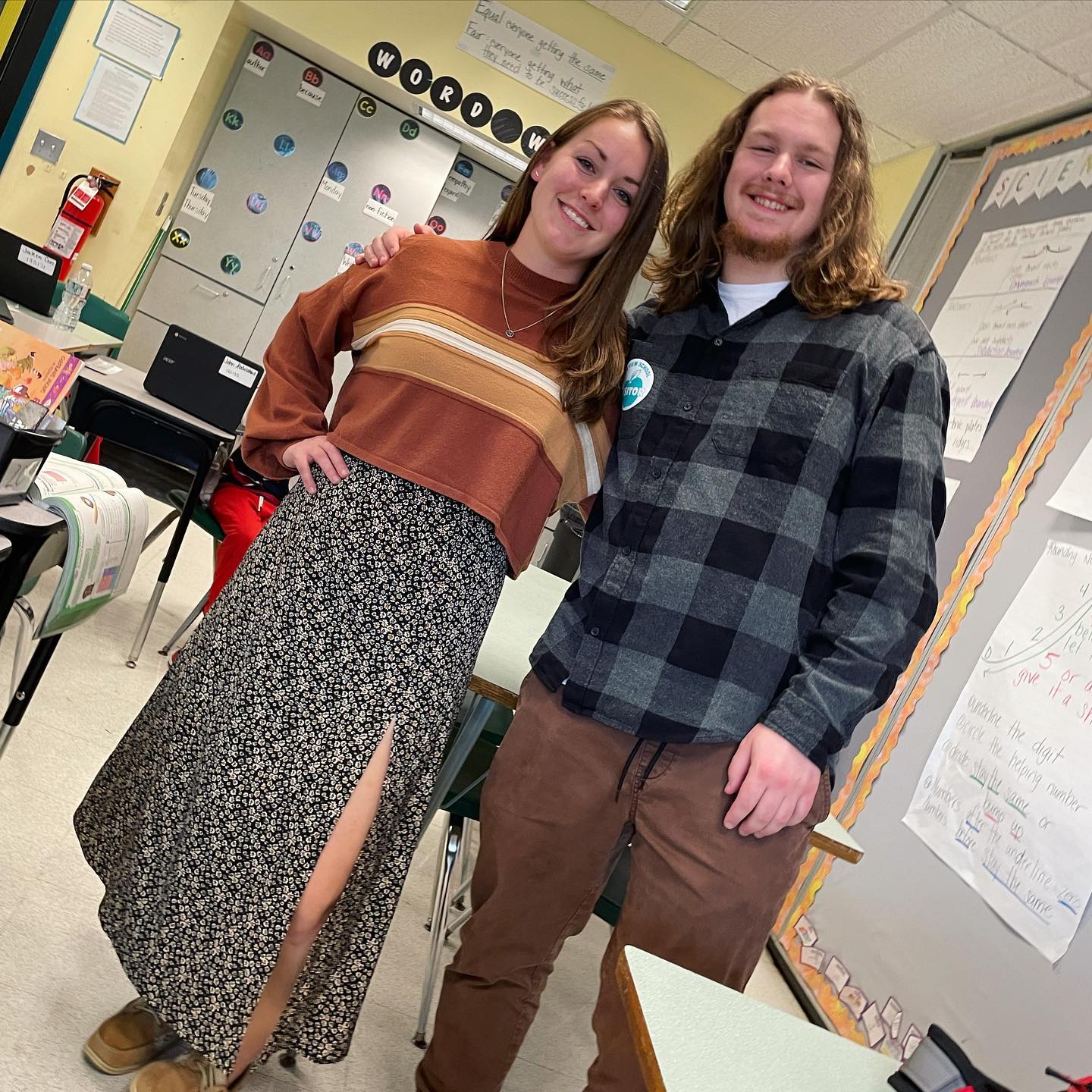
Me visiting my sister’s 4th grade class at City View Elementary! I got to help out with their math lesson and learn some valuable information on vertical alignment. Thanks Mackenzie!
Another round that stood out to me was attending a 10th grade English/theater class at Claremont. The lesson was the start of a long project where students were going to take part in a murder mystery and had to apply what they knew about character types to create their own characters and decipher who the murderer was. The lesson showed me how engaged students get with having a bit of control and choice over their learning. I started adjusting some of my more practice-based lessons to allow students to choose what practice they want to take first instead of having each student working on the same few problems. Projects also started to have some of these options as well, with both projects from my second CUP having the ability for students to choose how they want to go about the project and what challenge level they want to work on.
Professional Development Put to Work
As mentioned above, I had the privilege of attending a few conferences to develop me as a teacher. The MAT program hosted Mirko Chardin three times for development in UDL and culturally responsive teaching, which was a very beneficial experience for improving my teaching. I had a lot of conversations with Mirko after the conferences asking specific questions on how to address things currently going on in my classroom. I remember after having a conversation with him about good ways to really get students to buy into a math class, Nathan and I went hard at work in creating lessons that reflect what most students are currently interested in. Nathan and I came up with the job systems of equations project he used in his 9th grade class, while I found ways to include more money-related problems into my classroom to ensure students saw the value of understanding mathematics of finance problems.
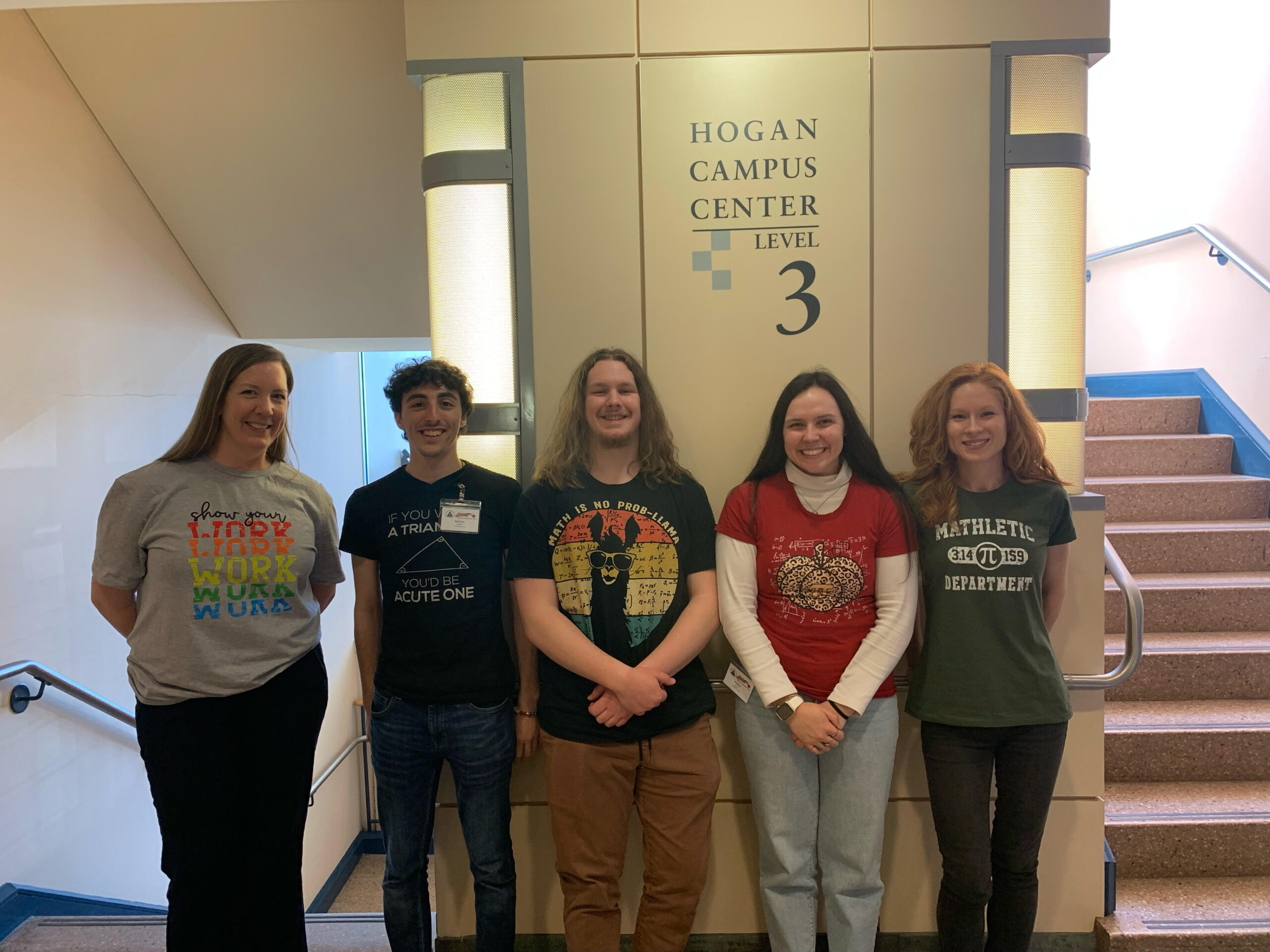
The math team at the ATMIM Conference. How can you not love our math shirts!?!?
The ATMIM Conference was a big push for me in terms of learning about how to push every lesson to put as much thinking as possible on the students. The keynote speaker discussed level 1 through level 4 thinking questions, where level 1 was very basic and required very little thinking on the students’ end, while level 4 went as far as having the students leading their own self-driven research in the topic. I used this as a measure for each assignment I did with my students from then on. I first started by making sure that I eliminated any level 1 assignments or questions. If I got everything to at least level 2, students were at least completing most of the thinking. As I got more comfortable with implementing at least level 2 lessons each time, I started to push those level 2 questions to level 3. Progress can feel slow at times in teaching, but as the time has passed since the conference, I’ve found a lot of my lessons becoming much more thinking and student focused, which has helped to increase comprehension and retention for students in their learning.