


Blogger, Ana Ruggieri
Hello visitors, peers, Clark faculty, families, and everyone in between!
Today, my first blog day in Istanbul, was Clark’s 2nd full day in the city! We were introduced to magnificent mosques and the etiquette that comes with entering, admiring, and learning about them. I covered SO much presentational and experience-based information, so keep reading to hear and learn about:
- Carson Dobos’s presentation at the Mosque of Suleymaniye
- Information about mosque etiquette and who the mosque is named after.
- The remains of the Church of Polyeuktos
- What it looked like, and how exploring an excavation site contributed to my knowledge and appreciation for archeology and art history.
- Gabby de Leon’s presentation at the Aqueduct of Valens
- Information about the Aqueduct and its role in the city of Istanbul.
- Kacie Lennon’s presentation at the Zeyrek Camii
- Information on what the Zeyrek Camii is, and what we learned about it through Kacie.
- Paulina Allen’s presentation at the Kalenderhane Mosque
- Information on Byzantine churches converted into Mosques, and what the role/architecture of this Mosque is.
- Cats of Istanbul Blog section
- I will share images of all the cats of Istanbul I recorded or saw today, including a very special encounter at the Zeyrek Camii with a Mosque kitty.
- Future inquiries
- (What more do I want to know about the places I saw and things I did today?)
I woke up around 8 am, tired, unprepared, and ready to start my day! I had only been in Istanbul for around 40 hours, and I was beginning to fall in love with the city, one stray cat at a time! The walkways are hilly, slim, and mainly force you to walk on the road for the most part. The restaurant hosts yell and call out to you as you walk past, attempting to pull you in as a customer through what they think is seduction…
Nonetheless, the culture, with its delicious Mediterranean foods, magnificent handmade products, and bustling Bazaars, is a one-of-a-kind environment. I ask myself, “How will I ever leave?” along with “How did I possibly get here?” at least once a day.
We assembled in the hotel lobby of Hotel Nena at 8:30 am and began our walking route for the day! Once we were on the road, I started my vlogging sequence for the day, wanting to keep up the experience for myself, the group, and the blog posts! We were off to see Suleymaniye and Carson’s presentation!
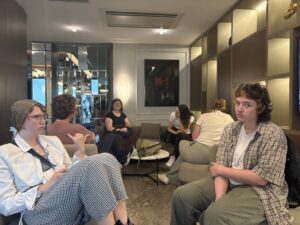
Our early morning assembly! You can see the joy jumping off of our faces LOL! We were very tired, but little did we know the day ahead would be filled with so much excitement!
PC: Ana Ruggieri
At the Suleymaniye Mosque, otherwise known as the Magnificent Mosque of the Sultan Suleymaniye, we listened to an in-depth presentation on the history of the Mosque, why it was built, its setup, including the three vertical towers that protrude from the complex, adding to its grandiose-ness and impressive scale. As Carson told us, the mosque is located on the third hill of Istanbul and was commissioned by Sultan Suleiman the Magnificent in the mid-16th century. For those of you interested in visiting mosques or learning more about Islam as a religion, here is a brief Mosque etiquette guide from what I have gotten to experienced:
- Dress modestly (covering arms to the elbow and legs past the knees) and remove shoes before entering the prayer area. Women should also cover their heads and hair with a scarf, Hijab, or cloth.
- Always maintain a respectful and quiet demeanor when possible, and be sure to avoid loud conversations or disruptive noise.
- Avoid interrupting any prayers taking place, whether individual or ceremonial.
- Typically, if you are going to participate in a prayer, men pray in front and women pray in a separate section behind them.
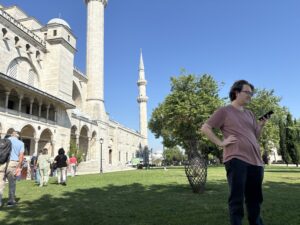
Carson is giving his presentation at the Mosque! PC: Ana Ruggieri
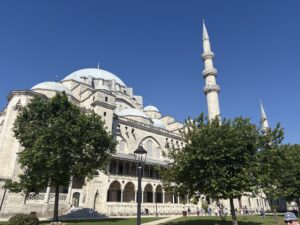
The Mosque of Suleymaniye from the outside.
PC: Ana Ruggieri
IMG_1621 2.HEIC Photo of the Tomb of Sultan Suleiman the Magnificent and his wives next to his Mosque!
After seeing the Tomb of Suleiman and his wives, the next stop on our agenda was the Sehzade Mosque, or the Prince’s Mosque. This was our second 16th-century Ottoman imperial mosque of the day, and it was located in the Fatih district of Istanbul, similar to the Mosque of Suleymaniye. This mosque was also commissioned by Ottoman Sultan Suleiman the Magnificent, as a memorial to his son, Sehzade Mehmed, who died at twenty-two years old. At this mosque, I decided I would start to take pictures of and record my encounters with the cats of Istanbul.
Next up, we made our way to the Aqueduct of Valens, where Gabby was going to do their presentation! It was fantastic, and I was so intrigued to learn more about the first Roman-era Aqueduct I had ever seen. Built in the 4th century during the reign of Emperor Valens, this historic water system rose to 96 feet high and was about 1 kilometer long originally. Under the Byzantine rule, the aqueduct transported around 16 million gallons per day to the city from springs outside the city. It spanned from the hills of Fatih and the Third hill and was extended under the Ottoman sultans, including Suleiman the Magnificent. Currently, about 921 meters remain of the Aqueduct, and it can be seen as a bridge-like structure, with arches that now separate lanes of traffic.
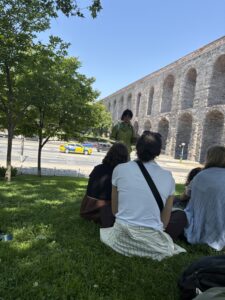
Gabby is doing her presentation at the Aqueduct of Valens!
PC: Ana Ruggieri
Once Gabby had finished her presentation, we prepared for our third presenter, Paulina Allen, to take the reins! At the Kalenderhane Mosque, Paulina completed her final presentation of the trip, officially becoming the FIRST one of us to finish our presentations. It was an emotionally relieving moment for all of us, and we reminisced on the impact of previous art history and archeology professors, along with their massive contributions to the world of archeological restoration and preservation. I find it immensely important to highlight the importance of this field, and what it does not only for art lovers, but for history and humanity as a whole.
Paulina presented the Kalenderhane Mosque, which was another converted mosque from the conquest of Constantinople. This mosque was initially constructed in the 6th century and was heavily rebuilt in the 12th century, likely following earthquakes and structural decay. It was notable for its domed roof and the lasting Byzantine frescoes that were uncovered in the late 20th century. Since then, it has been restored and used as an active mosque.

Paulina is presenting her last presentation.
PC: Ana Ruggieri
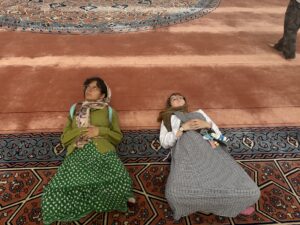
Sophie and Gabby in the Mosque of Kalenderhane.
PC: Ana Ruggieri
After satiating our archeological stomachs, we headed off to lunch to satiate our hunger for food! We stumbled upon a self-service style restaurant with the cutest bungalow-style seating room, which was accessorized with wall lighting, comfortable couch-like seating, and some of the most delicious food I have ever had the pleasure of eating! I ordered a cheese potato and chicken dish that I have been searching for the name of ever since… to no avail. However, I did have a bowl of rice pilaf and a Mediterranean salad as a side dish. It was sooooo delicious except for the jalapeno pepper I accidentally ate.
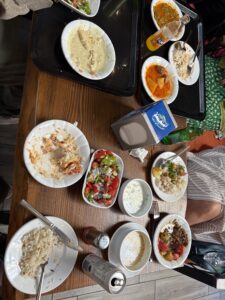
Lunch! It was so tasty, this photo features what was left of our plates… not much! A 10/10 meal.
PC: Ana Ruggieri
After lunch, it was onto the remains of the Church of St. Polyeuktos. These remains were located at a mid-excavation site at the archaeological park of Istanbul. Thanks to Professor Pitamber and her dedication to teaching us about the major archeological excavations in the area, we were allowed a VIP personal tour of the site as it was in the process of being unearthed. It was the first-hand experience I had had with actual archeological findings, and walking through the site made me feel like I was truly an archeology or art history student! We walked across the wooden support stairs and bridges that the archaeologists were using, and we went into a portion of the interior of the church, which looked and smelled a lot like a cave, with damp, dark walls, but was filled with so many stone remains of the church. We saw the arch of the ceiling, and from the exterior, we assessed the mistakes of a previous archaeologist, who added concrete to the top of the site and most likely ruined some of the remains underneath it. Unfortunately, we were unable to take any photos once inside the site, however, I did sneak this picture of the flowers that were growing inside the site. I feel like the flowers here symbolize the growth and potential that this excavation could produce! It was such a magical, unique, and special sight to see, unlike anything we had been to during this trip.
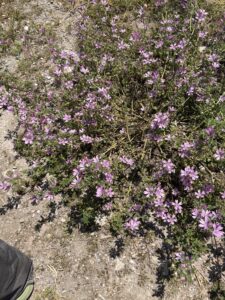
Flowers at the excavation site, showing the beauty of what the site will become in the years to come!
PC: Ana Ruggieri
Once we were full of hope and sustenance once more, we moseyed over to the site of our fourth and final presentation of the day, the Zeyrek Camii Mosque. At the Zeyrek Camii (originally the Monastery of Christ Pantokrator), Kacie Lennon did her third presentation! We learned about the complex’s rich history and religious transformation under the Ottoman Empire. This was a common theme among some of the mosques we visited today, but I will save that information for Paulina’s presentation description. In the 12th century, it originally included two churches and a library, and then an additional church was added to form one large complex. Since then, it was converted into a mosque shortly after 1453, and is still used as an active mosque to this day, following some extensive restoration processes in the early 2000s to stabilize and preserve its structure.
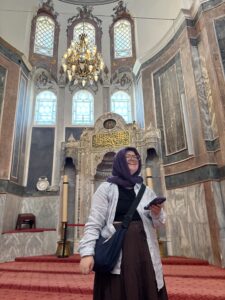
Kacie is presenting at her World Heritage Site of the Zeyrek Camii.
PC: Ana Ruggieri
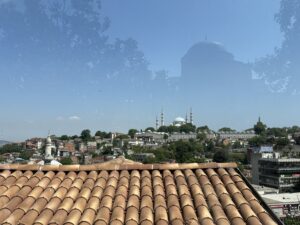
We stopped for Chai after Kacie’s presentation. Here was the view from the rooftop terrace we were seated at! PC: Ana Ruggieri
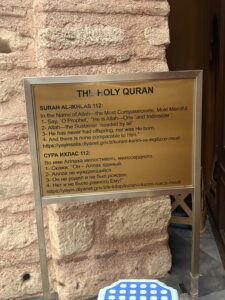
Prayer outside of Zeyrek Camii Mosque.
PC: Ana Ruggieri
All in all, today was the most hefty day I have had to blog thus far. It was beyond eye-opening at the archeological excavation site, the presentations, the delicious lunch experience, and all of the furry friends we met along the way. Speaking of those furry friends… Here is the much-promised cat catalog from today, including a special photo progression courtesy of Sydney! I hope you enjoy these pictures as much as I enjoyed the little kitties in them!
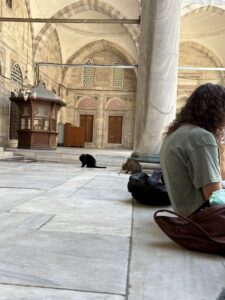
Kitties outside the Suleymaniye Tomb!
PC: Ana Ruggieri
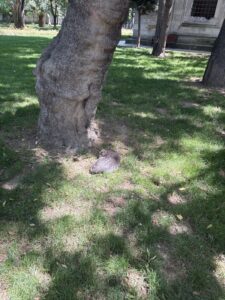
Kitty under the tree!
PC: Ana Ruggieri
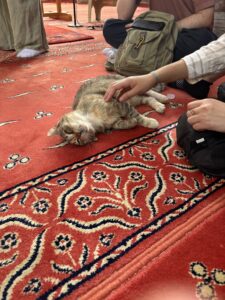
Kitty in the Kalenderhane Mosque!
PC: Ana Ruggieri

Kitty is at the rooftop terrace after Kacie’s presentation!
PC: Ana Ruggieri
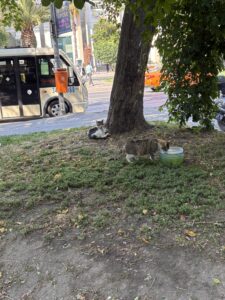
More Kitties underneath a tree! PC: Ana Ruggieri
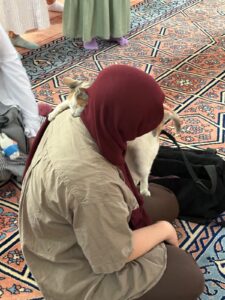
Phase One of “The Progression”. This was possibly my favorite moment of the day. We were in the Zeyrek Camii, and a small little boy kitten came over to me. I began petting him, and he slowly took it as an invitation to climb into my lap. He was licking my sleeves and shoulders, and started hugging my shoulder, he was the cutest bean ever!
Photo Credits: Sydney

Phase two of “The Progression”
PC: Sydney
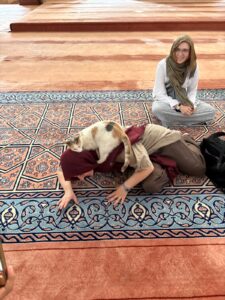
Phase Three of “The Progression” (yes, I finally did get him to climb off, begrudingly!)
PC: Sydney
My end thoughts are a mix of curiosity and intrigue…
- What will the new excavation of the Church of St. Polyeuktos look like in two years, or what about in ten years? Will it be a fully preserved archeological site in the short term, or is this going to be a lifetime of work before it is unveiled?
- How do I grapple with visiting these sites of immense religious importance while respecting the fact that I am not taking part in prayer? How do I show my utmost respect for a place of prayer while maintaining the academic importance of knowledge about them?
- On a much less serious note… How do I take home a stray cat…?
Thank you so much for coming along with me on this big day! I had so much fun blogging during this trip! It helped me reflect and really memorialize the experiences and places I have had the opportunity to see and go to. I can not wait for the rest of the trip to unfold! To learn more about visiting Istanbul and some of the above sites, check out these sites:
https://turkeytravelplanner.com/Religion/mosque_etiquette.html
https://muze.gen.tr/muze-detay/arkeoloji