Blogger, Jemma Salisbury
Today’s itinerary featured:
- A visit to the Topkapı Palace, with a presentation on its history by Syd Lyons and on its Harem by Grace Bramer
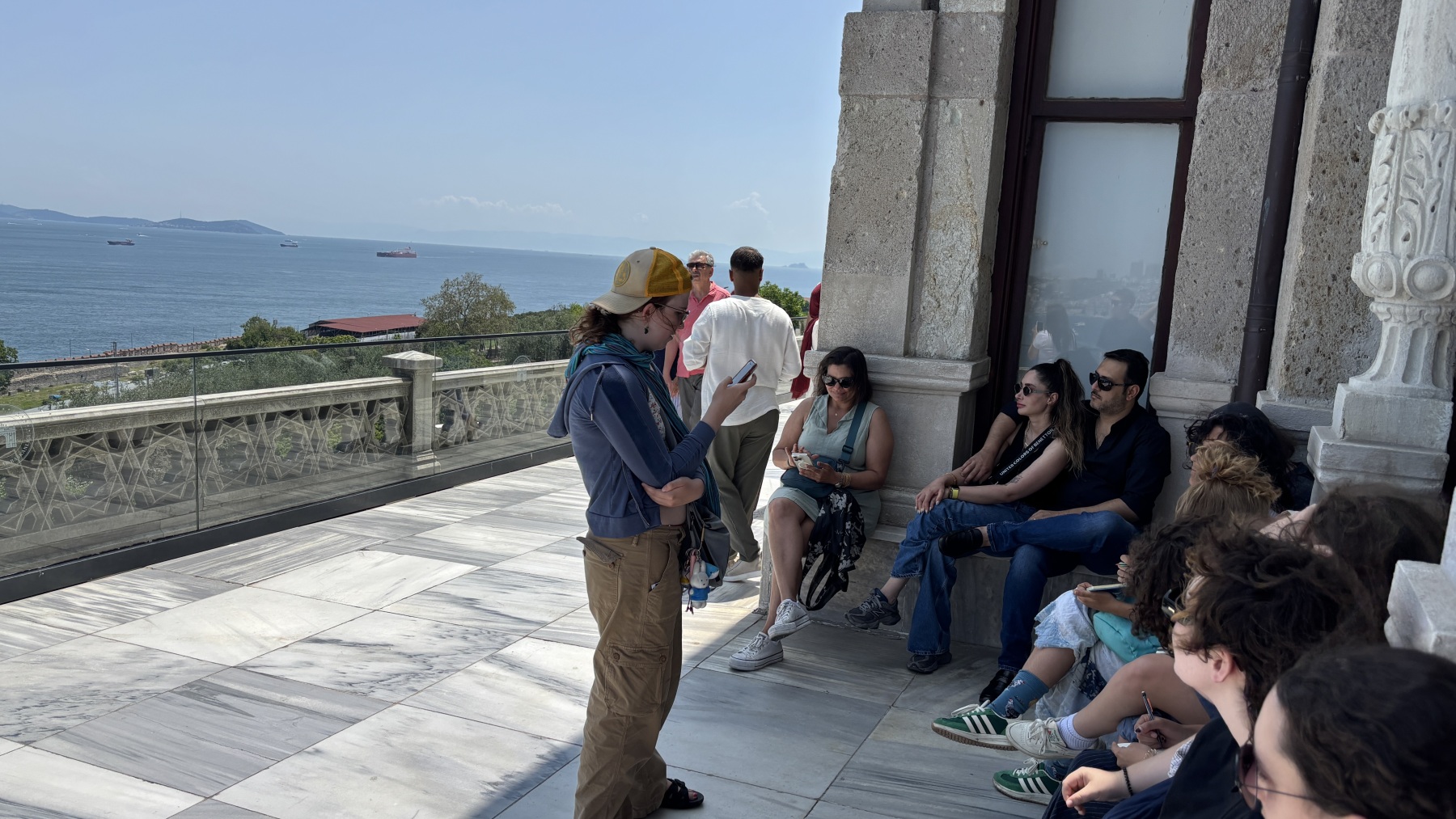
- Looking out over the Sea Walls of Constantinople, with a presentation by Sophie Mobray
- A visit to the Hagia Eirene, with a presentation by Carson Dobos
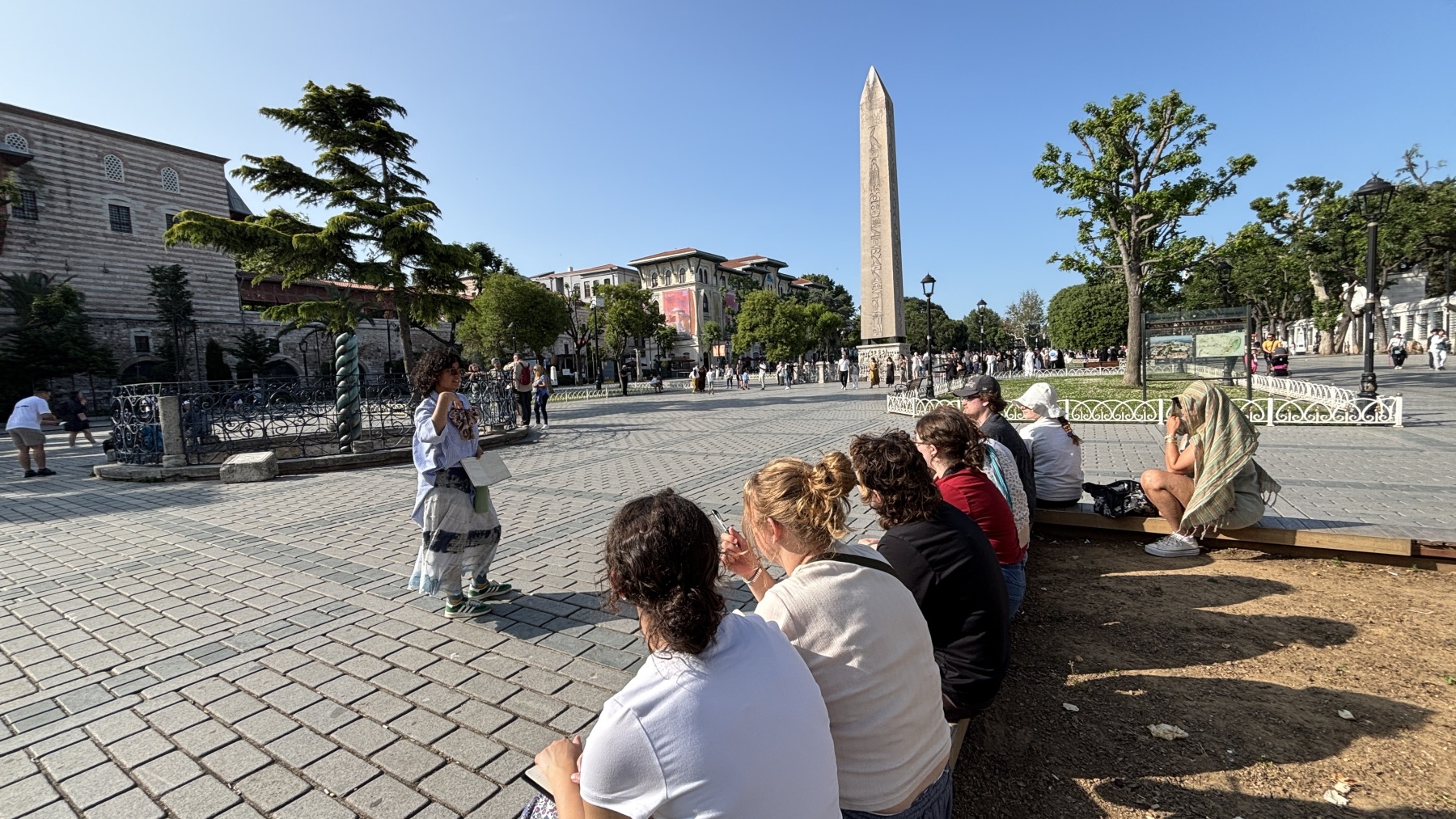
- Walking along the Hippodrome, with a presentation by Gabby de Leon
The Topkapı Palace
The Main Complex
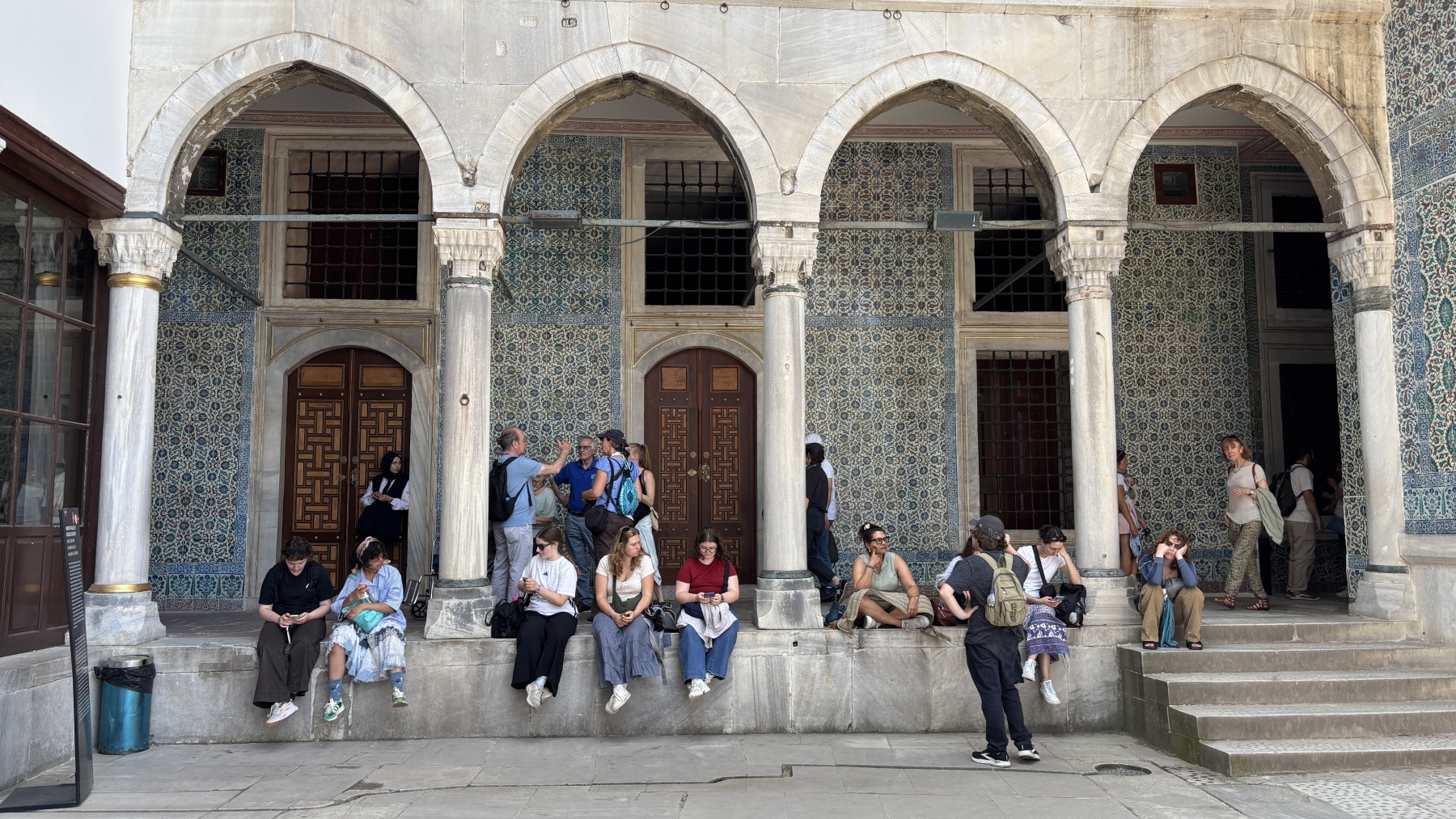
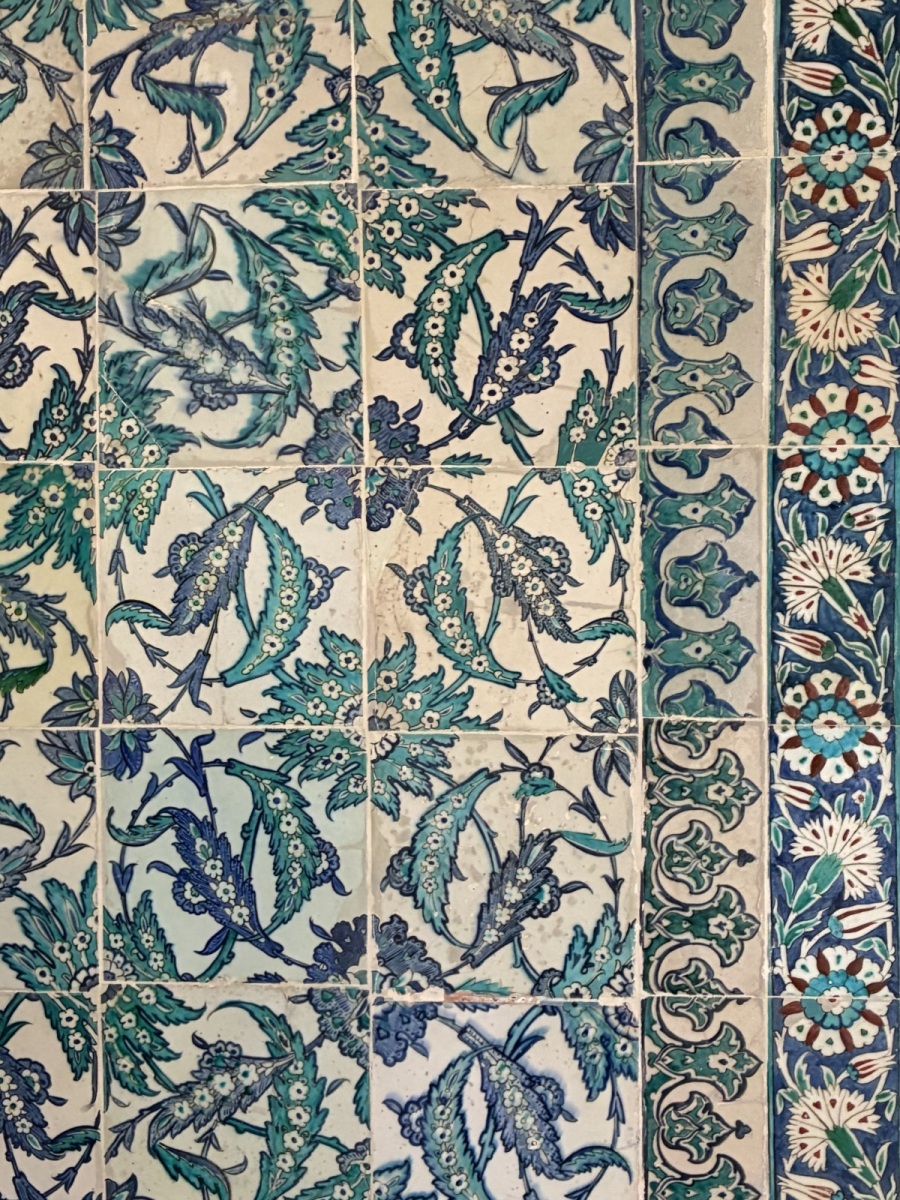
We entered the Topkapı Palace (or “Tan Gate” Palace, referencing its main entrance) ahead of a line winding around the block to gain entrance to the historic complex. Its first Ottoman building phase was initiated in the 1450’s by Mehmet the Conquerer. The complex’s buildings are organized around four central courtyards, each with their own grandly decorated entrance gates. Renovated continually by successive sultans, most of the current architecture left is from the 16th century, but aesthetics throughout the palace include Ottoman, Byzantine, Neo-Classical, and even Rococo influences. This wide range reveals the Ottoman empire’s international relationships, but also its desire to convey its power and influence through the same visual language of Western empires. Another important element of the Palace’s architecture is that, from the main entrance to the last courtyard, the entrances, courtyards themselves, and buildings become less accessible, and more private spaces, as public courts make way for the Sultan’s private residences.