Friday, June 13, 2025

Blogger, Gabby de Leon

Friday was one of our final full days exploring and learning in Turkey. After our long road trip from Bozcaada the day before, we were itching with eagerness for a day out on the town. Speaking of the town, one of the first things we noticed about İznik (also known as Nicaea) was that it was a town, rather than a city. It was on the more rural side of the places we had visited over the course of the trip, and this was a welcome change! We spent the day taking longer walks, sometimes along İznik Golu (İznik Lake) and the park surrounding it. It made İznik a slightly less stressful place to be– missing the hustle and bustle of places like Istanbul and Madrid as well as narrowing options for food and activities. This meant that even though we were in İznik for a short time, we

Friday was one of our final full days exploring and learning in Turkey. After our long road trip from Bozcaada the day before, we were itching with eagerness for a day out on the town. Speaking of the town, one of the first things we noticed about İznik (also known as Nicaea) was that it was a town, rather than a city. It was on the more rural side of the places we had visited over the course of the trip, and this was a welcome change! We spent the day taking longer walks, sometimes along İznik Golu (İznik Lake) and the park surrounding it. It made İznik a slightly less stressful place to be– missing the hustle and bustle of places like Istanbul and Madrid as well as narrowing options for food and activities. This meant that even though we were in İznik for a short time, we did not leave feeling like we missed anything we could’ve done in our spare time.

Our day started at breakfast around 9:00. I ate with Ana, Grace, and Sophie in the hotel’s garden. This was not the first hotel with breakfast in the garden (very pleasant!), but I was a surprised to find that it was more of a family-style situation than other hotels, where we ordered drinks (çay) and were served lots of plates to share with things like cheese, Sigara Böreği (rolled up pastry with cheese in the middle), nutella, and veggies. It was a splendid start to the day, and we began our walk to the second Ayasofya at approximately 9:45.
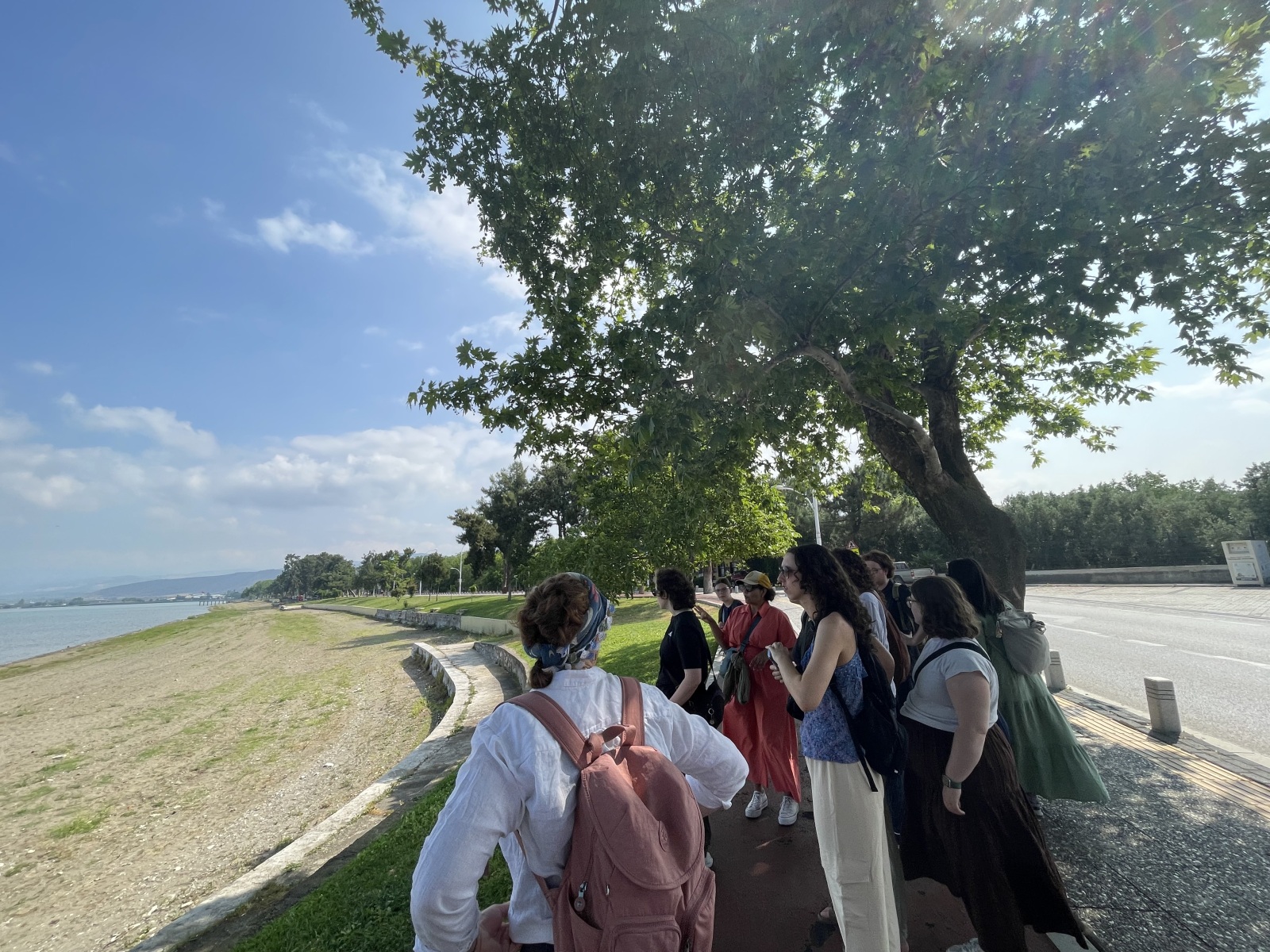
Looking out at the Submerged Basilica

Image 1 of 3

Photo by Gabby de Leon

As we walked along İznik Golu, We passed an interesting site that seemed to be closed for the day: a submerged basilica also known as The Basilica of Saint Neophytos. Though we didn’t get to visit it, I learned from a sign outside that it was discovered in early 2014 by the Bursa Metropolitan Municipality. Shaped like a standard Basilica with a nave and 2 aisles, a narthex and apses, it is believed to be a 5th century Early Christian church. As excavations continue, Archeologists from the İznik Archeology Museum as well as Uludağ University are investigating whether the basilica was built on the ruins of a 2nd-century temple to Apollo, as well as whether the First Council of Nicaea in the year 325, may have met in this basilica. The first council was a meeting of early christian leaders in order to unify the official Christian doctrines. Dr. Pitamber also took a moment to explain a bit about İznik’s walls and Göl Kapi or Lake Gate. She told us about how İznik’s walls were never breached, and also explained their religious aspects. In their prime, the walls were decorated with frescoes and dotted with churches. 

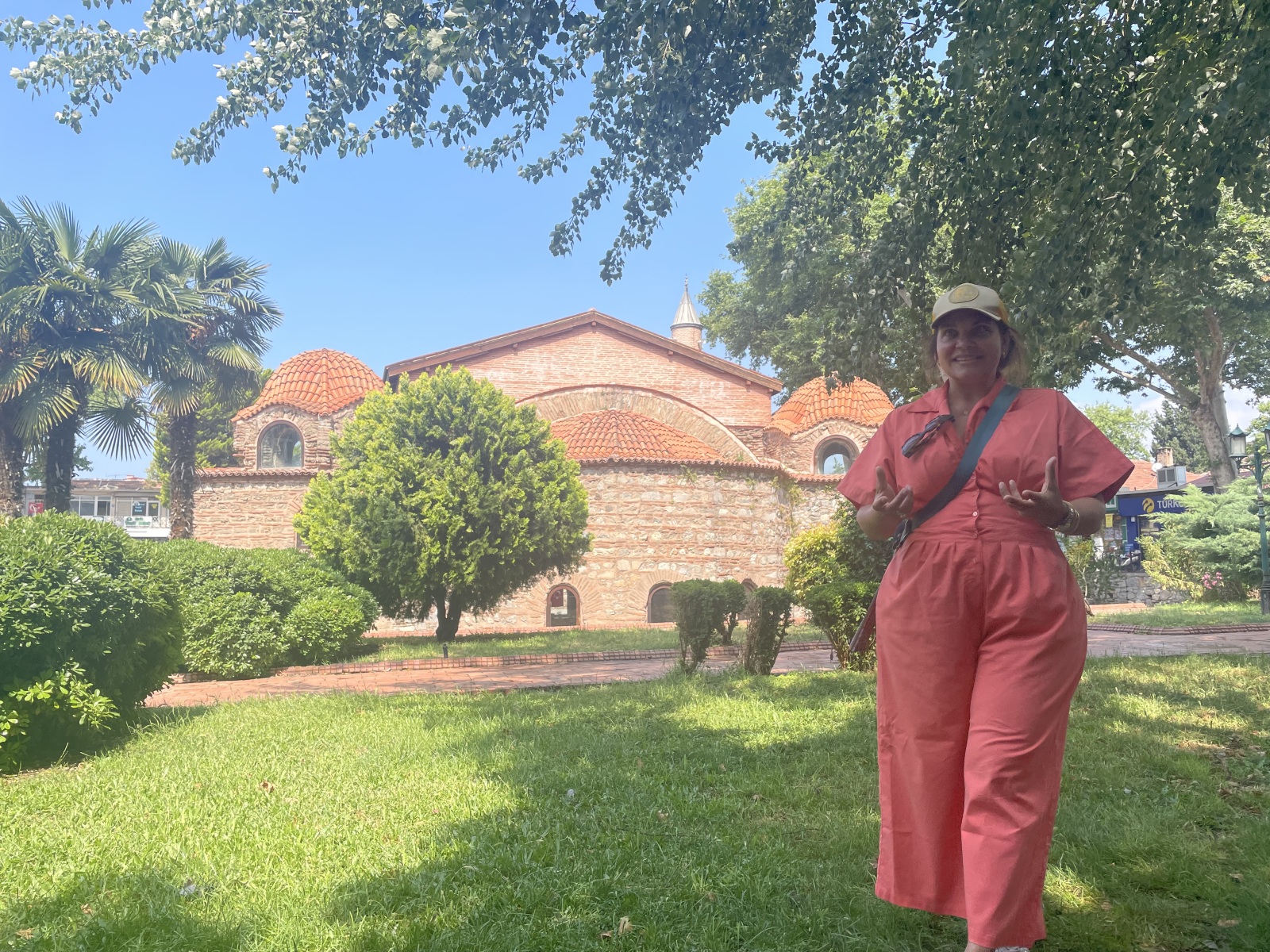
When we arrived at the 2nd Ayasofya, we were met with another unfortunately closed site. Arranged in the basilica style, but this time without a dome, we peered through the windows of the damaged Ayasofya Camii at its damaged walls and protected floor mosaic. Though we could not enter at that time, we were able to walk around the building and met at the back to learn more from Dr. Pitamber. She gave us a larger overview of İznik’s history as Nicaea. The city of Nicaea was built around the 2nd century and elevated to ‘Metropolitan’ status by the emperor Valens. This led to lots of funding to build bigger and better churches in Nicaea and made it the site for the first and last of the Ecumenical Councils in 325 and 787 CE respectively. This building in particular, the 2nd Ayasofya, was built in the 5th century under Theodosius as a replica of the original Ayasofya in Constantinople, built under Constantine II. When the first Ayasofya burned down, it was replaced with the larger 3rd Ayasofya that we visited earlier in the trip. These churches were named as a dedication to “Holy Wisdom” during the iconoclast period, when the church began to ban depictions of people within holy spaces and works to avoid idolatry and follow the trends of growing islam. Dr Pitamber also went over the timeline of the dispute over iconoclasm that ended in Nicaea during the 787 CE Ecumenical council under Empress Irene. We would return to see the interior of the basilica, but also took a look at the replaced roof. The Ayasofya had been missing a roof until its addition in the 90s, so the interior is in pretty poor condition.

Dr Pitamber presenting at the Ayasofya Camii

Image 3 of 3

Photo by Gabby de Leon

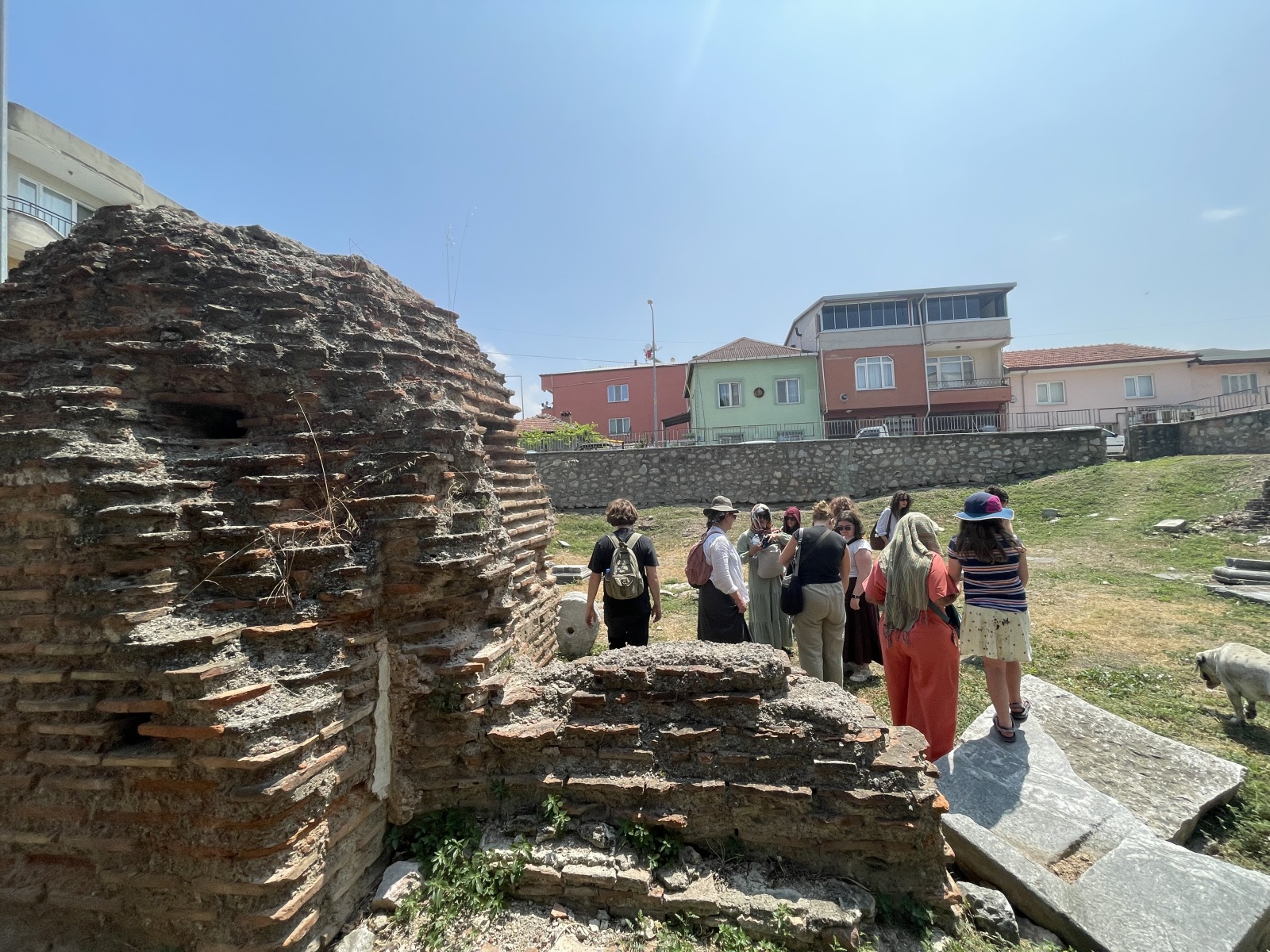
Everyone on the Koimesis Church ruins

Everyone on the Koimesis Church ruins. Photo by Gabby de Leon

After the 2nd Ayasofya, we quickly visited the ruins of a church called İznik’teki Koimesis Kilisesi, or the Koimesis church of İznik. This church was the center of a Greek orthodox monastery that was bombed during World War 1 as an attack on Greek Orthodoxy in Turkey. It was known for its mosaics that were photographed before their destruction. Though it was reduced to ruins, its destruction prompted scholars to look more into the study and preservation of other historical religious places around Turkey and the world. Professor Human related it to a recent effort to preserve and study Roman Amphitheatres, like the one we visited next.

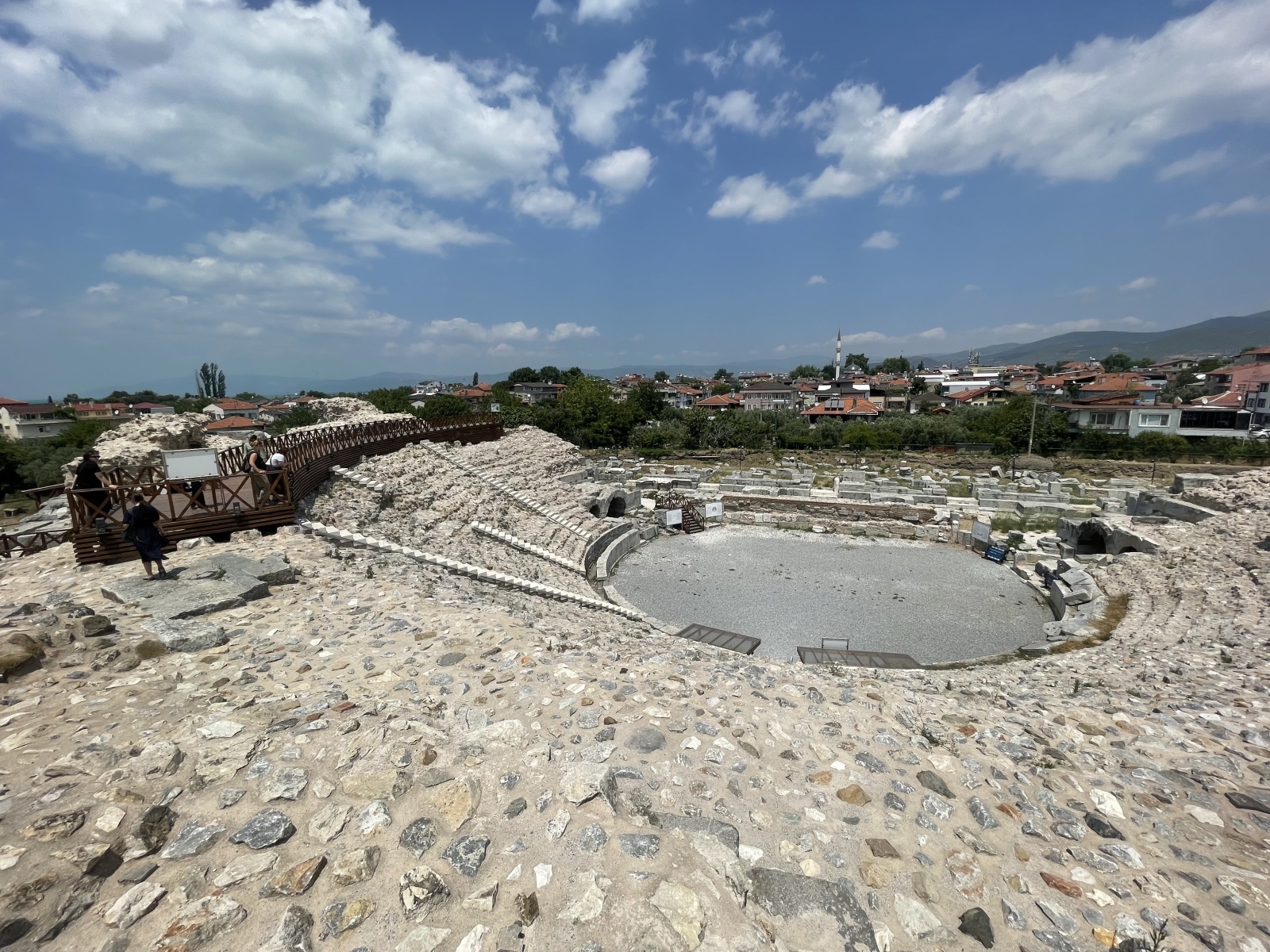
When we entered the excavation site, we were facing the back of the amphitheatre. We observed a few capitals and excavated pieces of marble trim, likely from inside the theater. We entered and explored the tunnels under the seats until they opened up into the actual seating area. The Amphitheatre was huge and its structure seemed to be largely intact. Signs pointed out the Tribunalia or Lodge where upper-class audiences would sit, as well as faded frescoes and the orchestra section where performers would have stood. The area that the horseshoe-shaped audience opened to, the pulpitum, was filled with other excavated pieces. The professors explained that the local rock we saw building up the seats had originally been covered with marble that was likely stripped for use in other structures. Generally, based on the amount of marble excavated, we would have been visiting a marble amphitheatre had we arrived a few hundred years earlier. 

The İznik amphitheatre

Image 1 of 2

Photo by Gabby de Leon

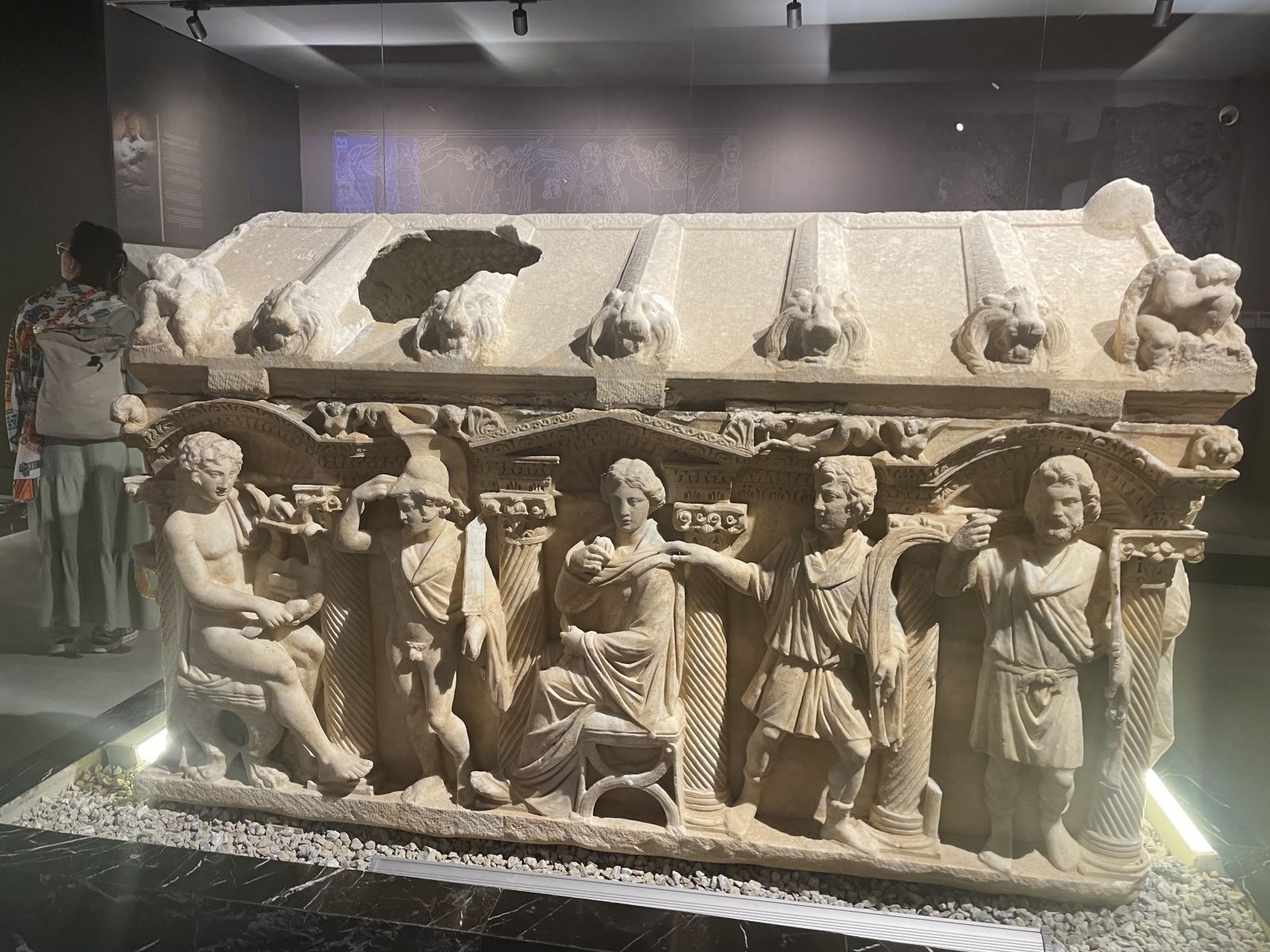
After many ruins in a row, we stopped at a cafe for a quick break. They served us plates of fruit and Sophie and Grace competed in some intense games of chess with Rosemary and Ellie. The jury is still out on who won between Sophie and Rosemary! Next, we took a peek at the walls of İznik before entering the Museum of İznik. The museum had a wide array of objects, from Neolithic bone tools to 2nd Century Sarcophagi and Ottoman Ceramic. I did a double take at the Sarcophagus of Achilles, named for its depiction of the Iliad’s stories rather than the person buried in it. 

Sarcophagus of Achilles

Image 1 of 4

Photo by Gabby de Leon

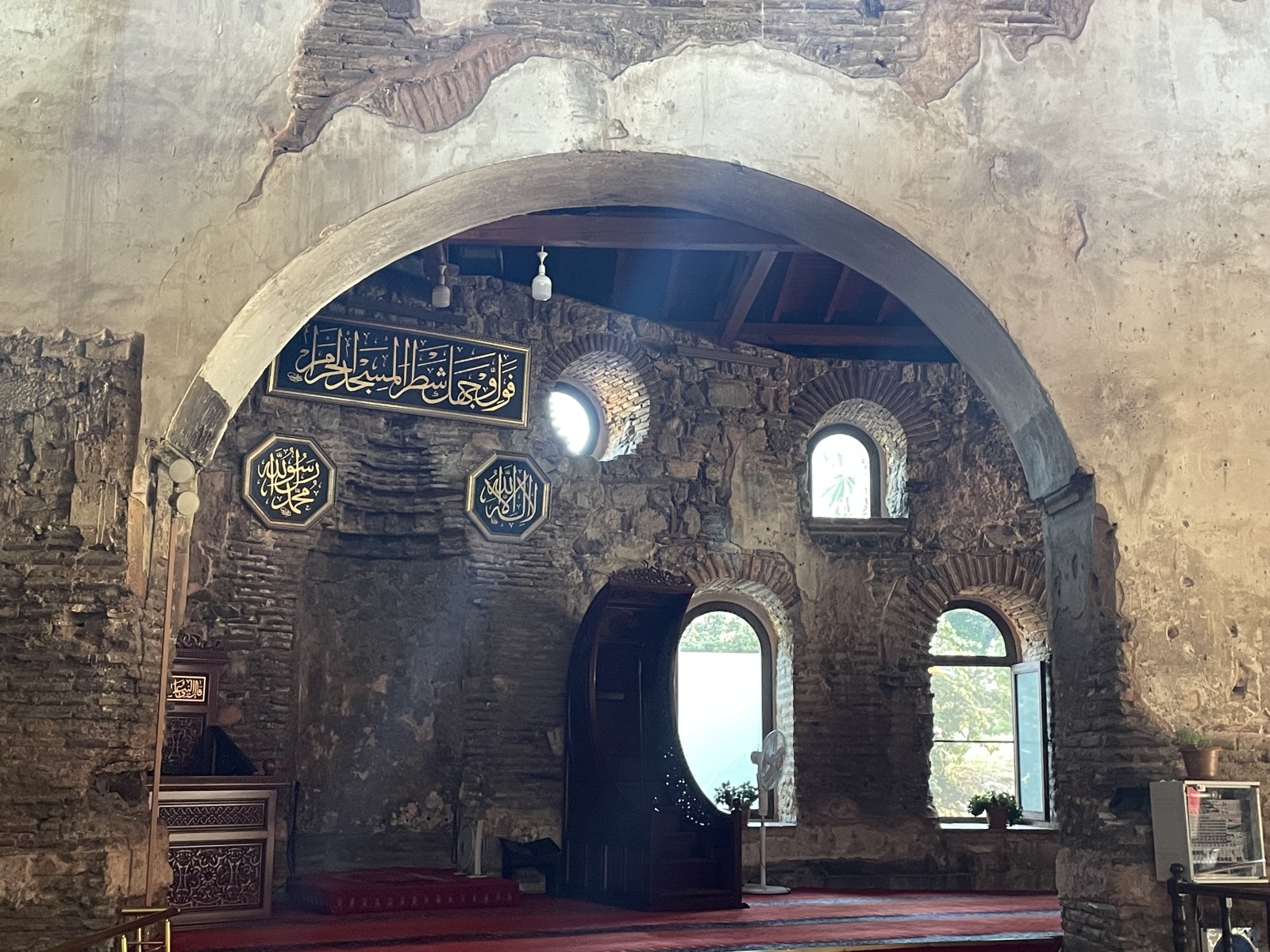
Afterwards, we walked through the sculpture garden and along the city wall towards the ruins of a kiln complex from the 15th century where iznik style tiles were produced. Imagining where the water to heat and cool the pottery ran was very interesting to me, and we had a lot of questions about how the complex worked. There were baths alongside kilns! We also stopped at an iznik tile market where we bought ceramic souvenirs and watched the tilemakers at work. Finally, it was time to return to the Ayasofya Camii to see the interior. We took a look at the colonades that were replaced with Ottoman arches, and how the brick shapes reflected that. Though the frescoes were very damaged, Dr Pitamber led us to one that depicted Philoxenia– the hospitality of strangers. It was mostly faded but since the professor had spent a lot of time deciphering what the frescos had been, she was able to point out and reconstruct remaining pieces like visible halos and a depiction of Jesus on a mountain. There was a lot to see in this tower-shaped room, and the professor explained all the visible parts and spoke on how important it is to study historical sites before they can be used for other purposes or destroyed. It was a very touching moment and I felt connected to the scholars who scrambled to document other sites after the destruction of the Koimesis church. 

Inside the Ayasofya Camii

Image 1 of 3

Photo by Gabby de Leon

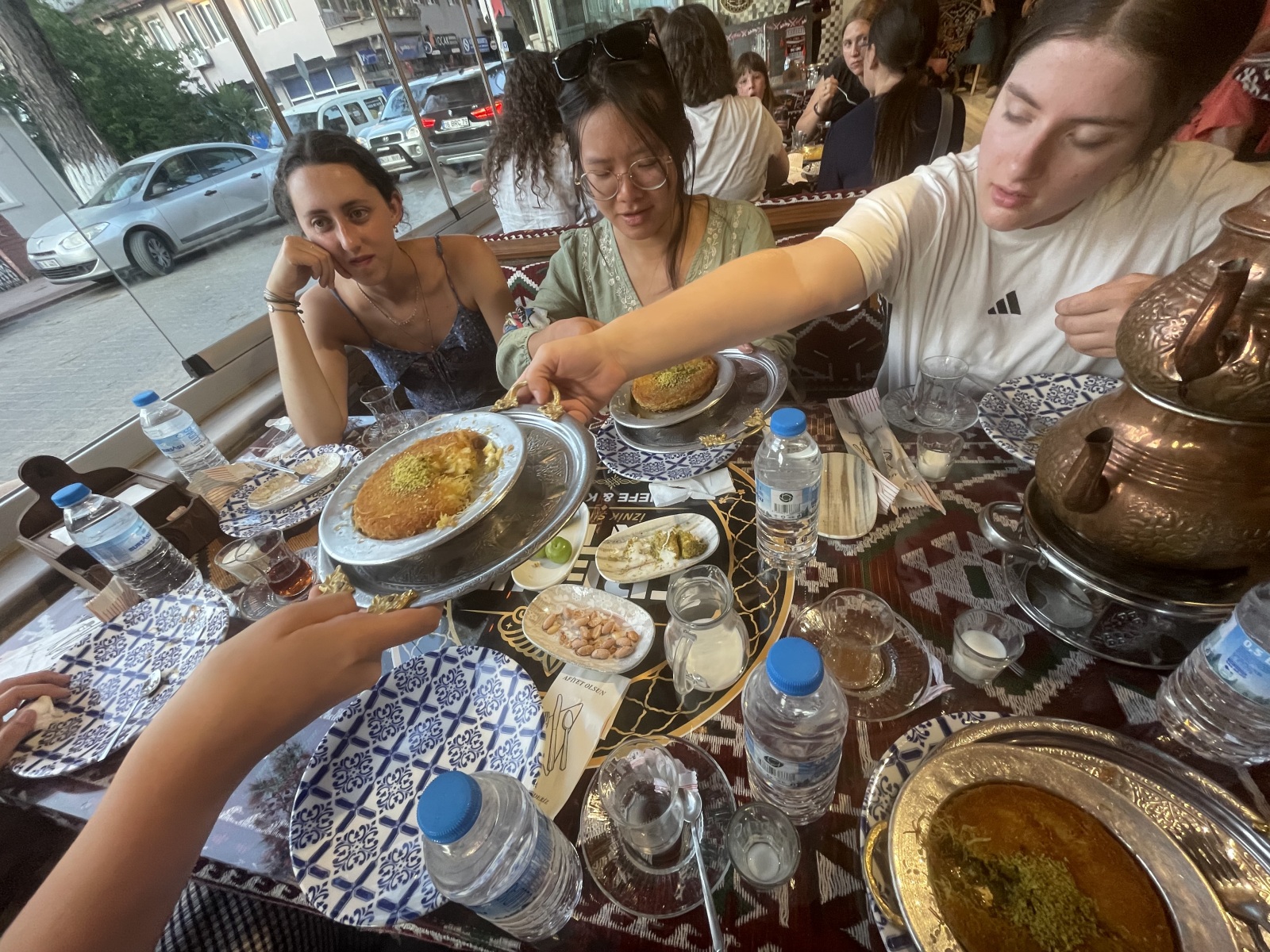
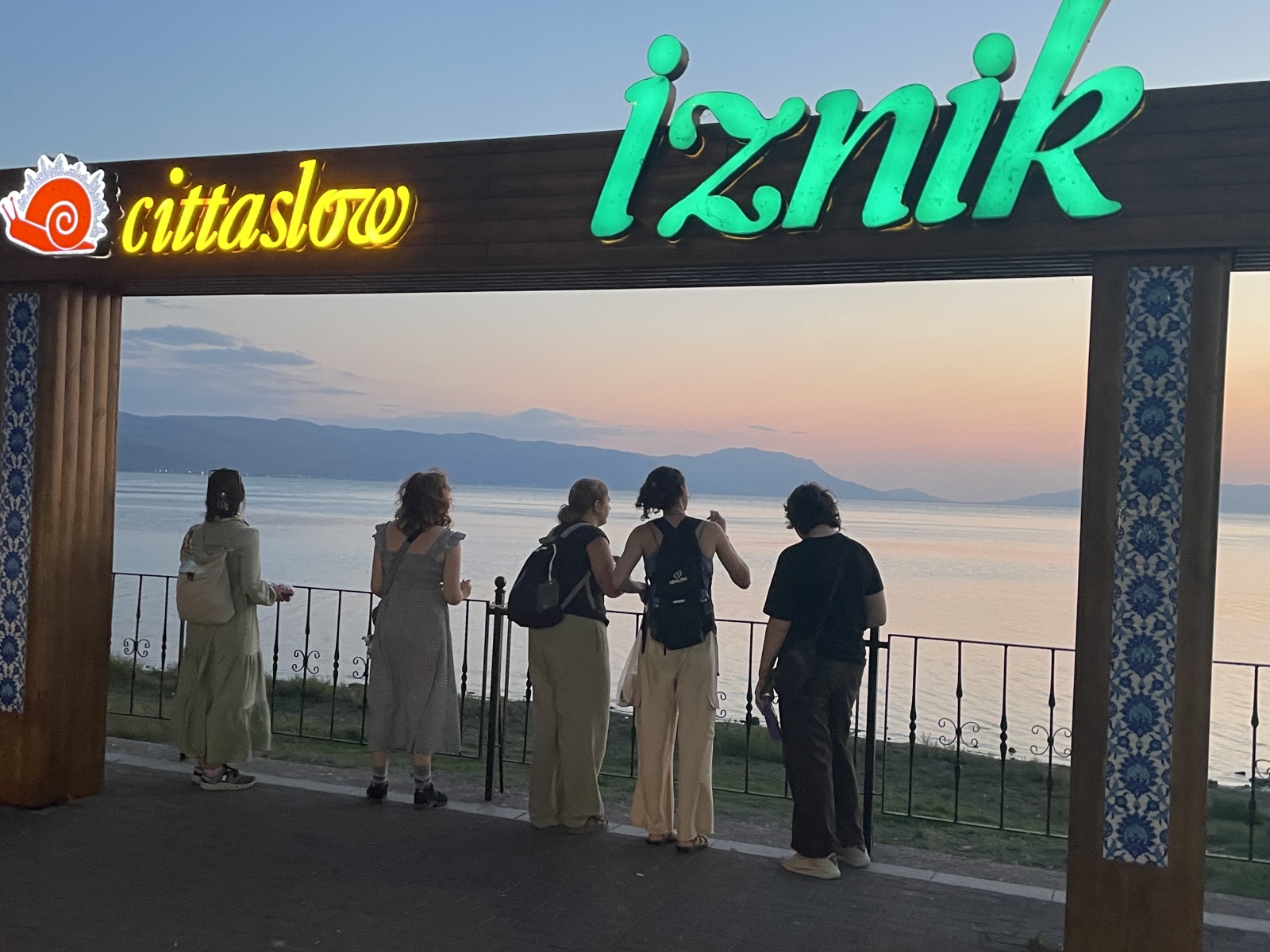
We finished the day at Antep Baklava, a restaurant that sold a wide range of baklava styles alongside tea. The pastry of the plain baklavas seemed to be shredded and fried rather than layered, and they also served ice cream with pistachio topping and katmer, a creamy flat pistachio pastry. It was a great wind down to the day and all the baklava was delicious. They also made the tea in a beautiful double boiling turkish teapot. The walk back at sunset was also beautiful, and our full day felt complete. 

Baklava Galore!

Baklava Galore! Photo by Gabby de Leon

Sundown on İznik Golu

Sundown on İznik Golu. Photo by Gabby de Leon

Comments are closed.