Wednesday, May 21, 2025
Our First Big Day: Exploring Madrid!
By Jemma Salisbury
Today was our class’s first full day abroad. Our two main activities were visiting the Museo del Prado and taking a walking tour of the city. Let’s dig in!
While the Prado Museum did not allow pictures to be taken, I took note of some of my favorite pieces while walking around the museum, sketching in my notebook while listening to an audio tour provided by the museum. Some examples were Saturn Devouring his Son, by Peter Paul Rubens (c. 1636), and The Triumph of Bacchus by Diego Velázquez (c. 1628-9). The building housing the collection consisted of three huge floors of mainly paintings, with a few statue annexes and classical furniture pieces interspersed in the collection. The sheer size of the halls, covered in the work of the masters, felt grandiose and surreal.
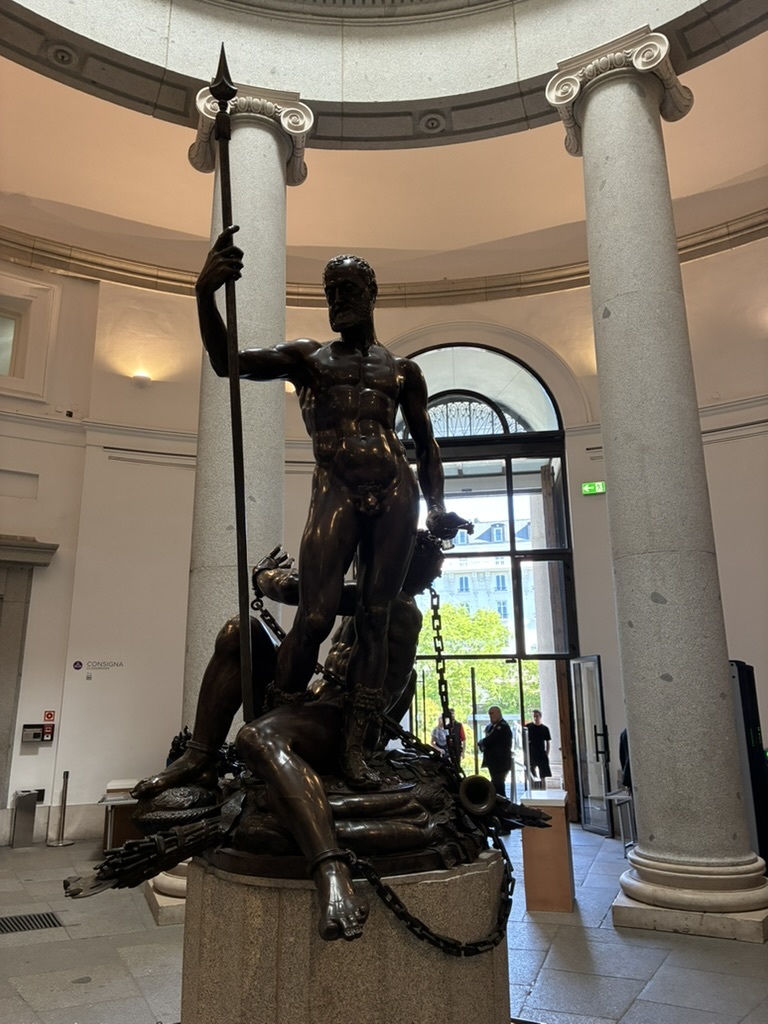
Leone Leoni, "Charles V and Fury: a detachable sculpture," c. 1551-55. Museo del Prado, Madrid.
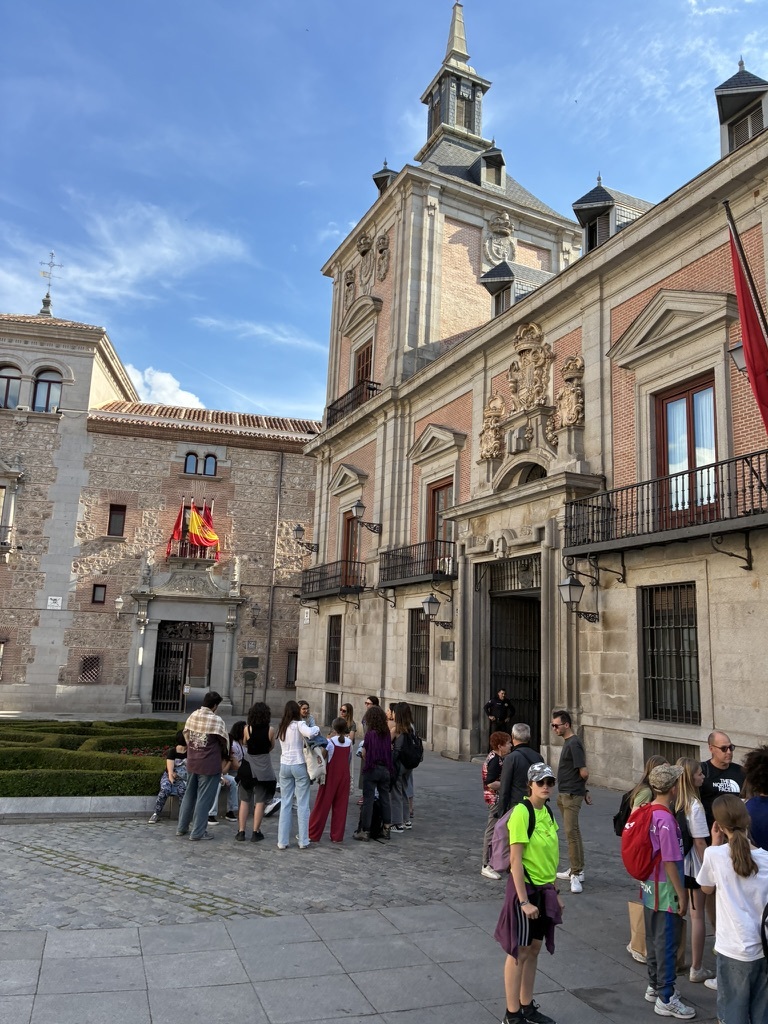
Our walking tour, conducted by Walkative Tours (which I highly recommend!) led us in a large circle around the city center. We met at the Royal Theater, built in 1850, and from there, made our way to the Royal Palace of Madrid. The biggest palace of Western Europe, its rear entrance opens onto the Plaza de Oriente. Above the fountain in the plaza sits a bronze statue of King Philip IV (r. 1621-1655). It is a unique monument, as it was rare in the 17th century for such a large statue to have little to no supports.
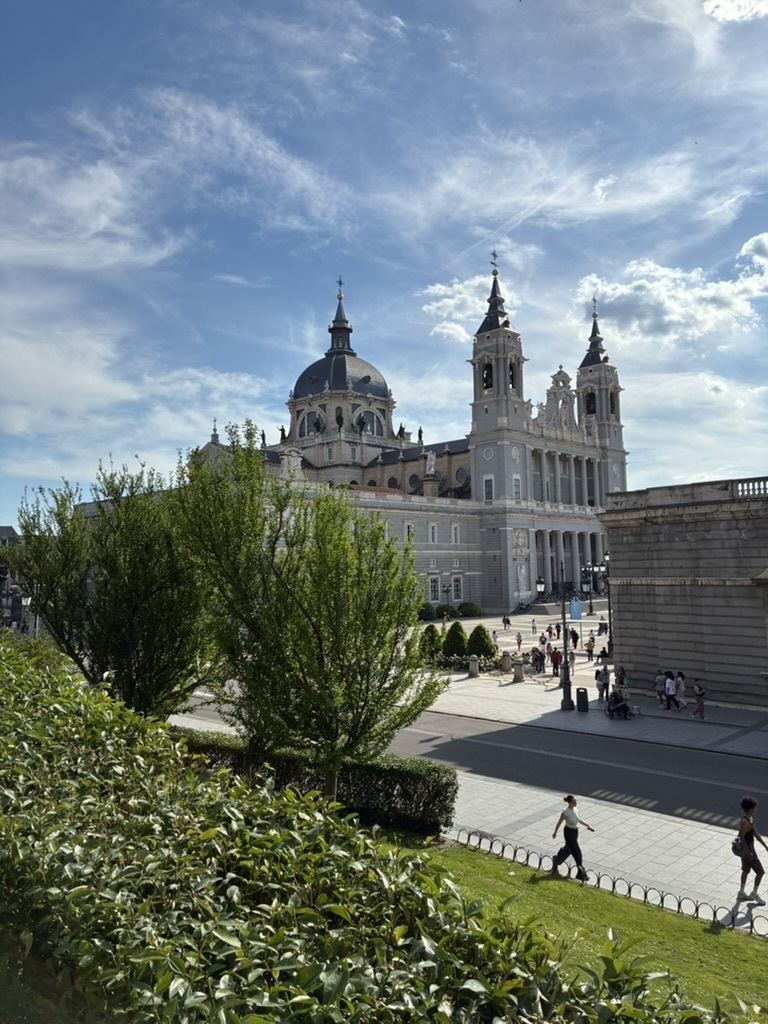
Across from the main entrance of the Palace sits the Almudena Cathedral, built over the span of a century (1883-1993) so that it displays a large mix of architectural styles, from a Neo-Classical exterior to a Romanesque interior.