Saturday, May 31, 2025

Blogger, Sydney Lyons

Highlights

  • Train ride to Malaga
  • Picasso Museum
  • Beach

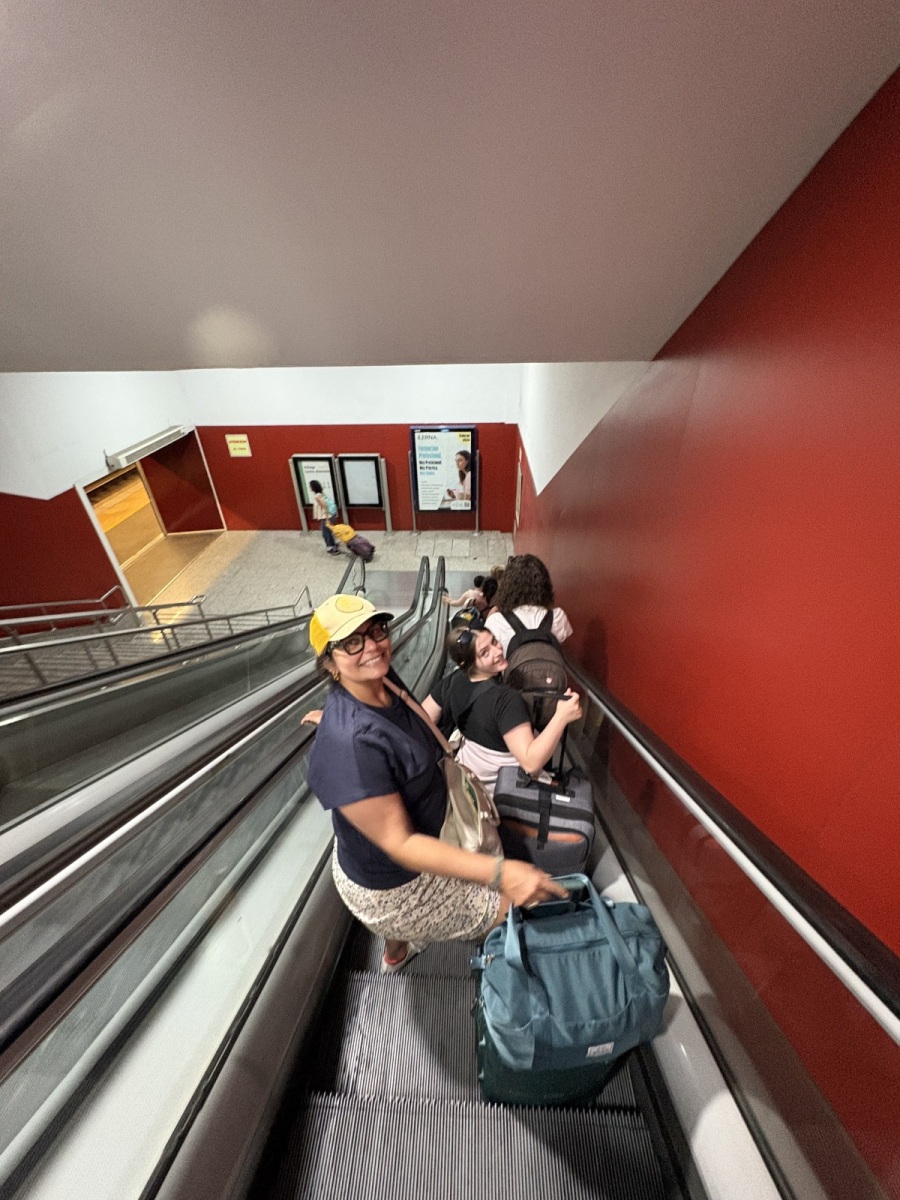
Today was our last day in Granada. We were able to have a slower start to the day since our train did not leave until noon, so people either spent the morning packing or taking one last look around the mountain-cradled city. Following our departure, we began the one and a half hour ride through the picturesque countryside down to the coastal city of Malaga. The locomotive transportation has been a lot easier to manage than I was expecting. Trains are one of the main ways that people get from city to city in Spain, mainly because of their efficiency in moving through the sprawling landscapes. As such, the process is quite streamlined. Our group has become well-versed in most aspects, including entertaining ourselves for long rides. We most often read, sleep, or do homework. 
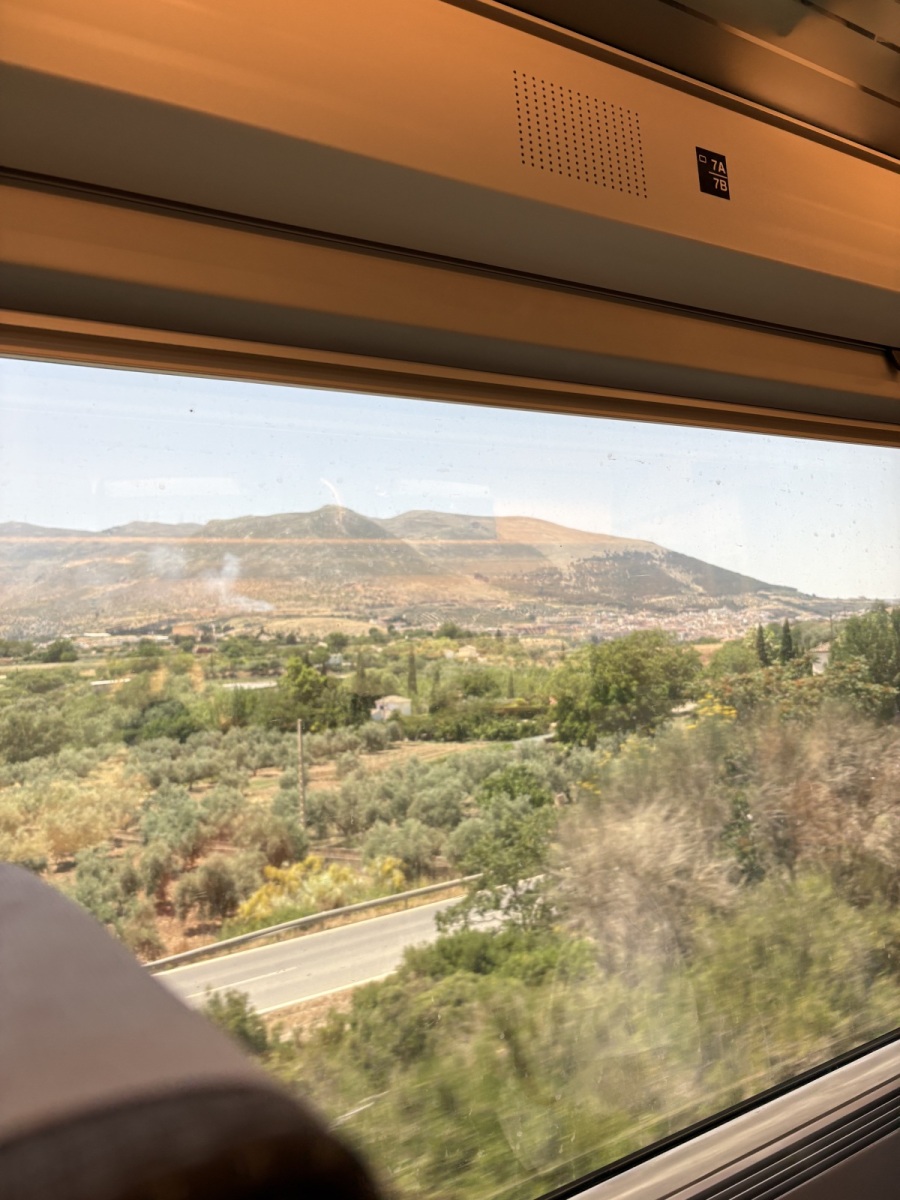
The View from the Train to Malaga

Image 1 of 3

Photo Credit: Sydney

Escalator Ride in Malaga Train Station

Image 1 of 2

Photo Credit: Sydney

After we checked into the hotel, we made our way to the center of the city for the Picasso Museum, which is fitting, as Malaga was his place of birth. This fact is one of Malaga’s biggest claims to fame, hence the museum’s location in the city center, with most of the museum’s collection coming from later members of Picasso’s family. Set up chronologically, the museum does an excellent job of demonstrating Picasso’s progression from classicism to cubism and into a combination of the two. Cubism, which was mainly invented by Picasso himself, is a style in which subjects are highly abstracted and constructed out of geometric forms as opposed to realistically with set boundaries.

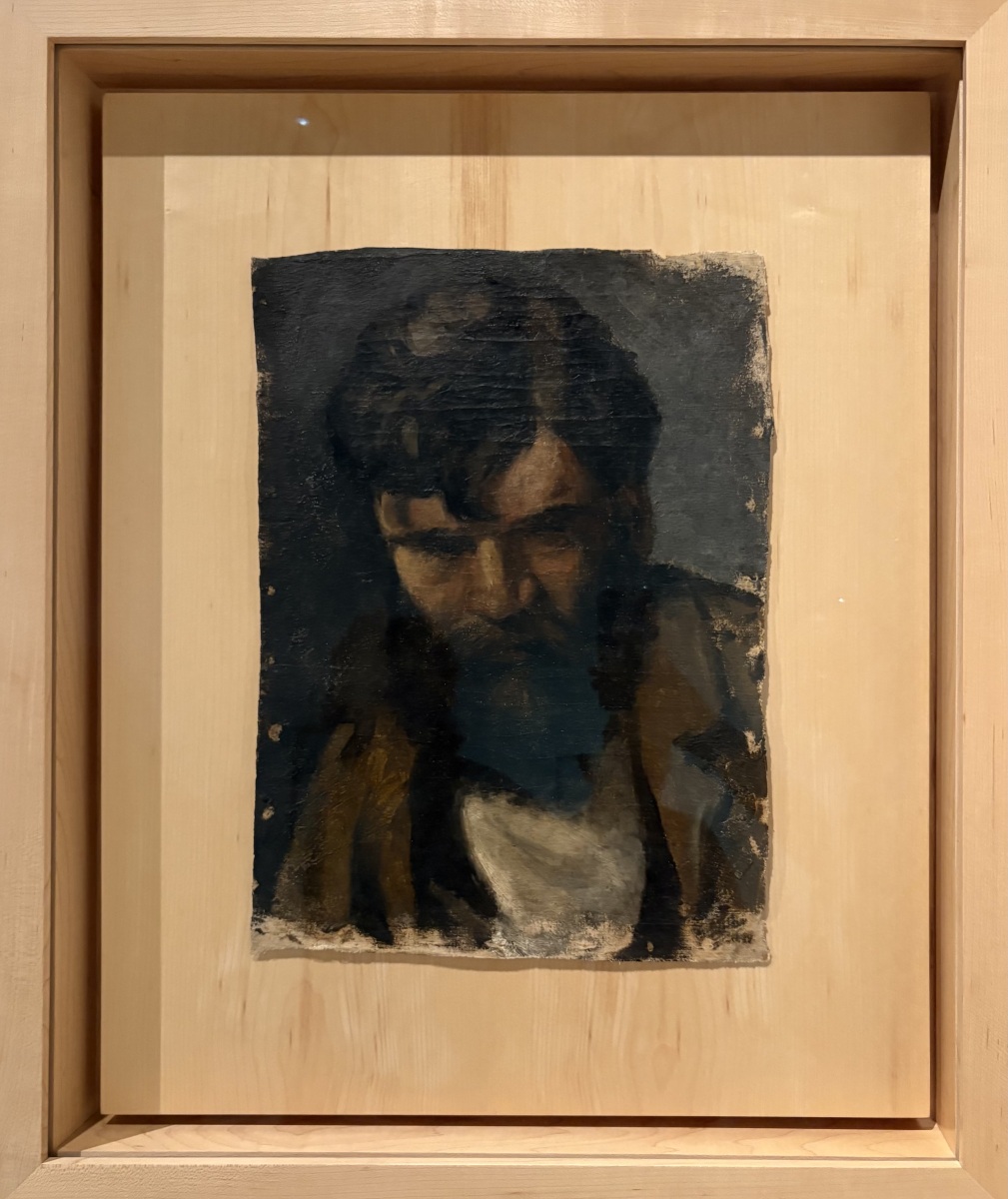
The image below shows a side-by-side comparison of one of his earliest classical portraits of a bearded man with his later cubic “Head of a Man.” It was fascinating to see this transition of the artist’s style as he moved through his career, and said transition is particularly accentuated by these images of similar subjects. In the first, classical one, one can clearly recognize the man’s face, the shadows that shroud him, and his downcast gaze. The second image in the cubic style does not have any of these predictable features, but rather challenges the eye to simply recognize the form of a man’s head when presented in a way that differs so greatly from the real-life visual norm. 

Picasso’s “Portrait of Bearded Man”

Image 1 of 2

Photo Credit: Sydney

Picasso’s most common subject was women, especially his first wife Olga. The first picture below is a painting of her, seated. Picasso’s fascination with painting women also led him to create a series of the Three Graces, shown in the second slide below. While most depictions of the Graces focus on their bodily forms, Picasso put more time and effort into crafting their faces, which are seen to be more detailed and thoughtful. 

Picasso’s “Olga Seated”

Image 1 of 2

Photo Credit: Sydney

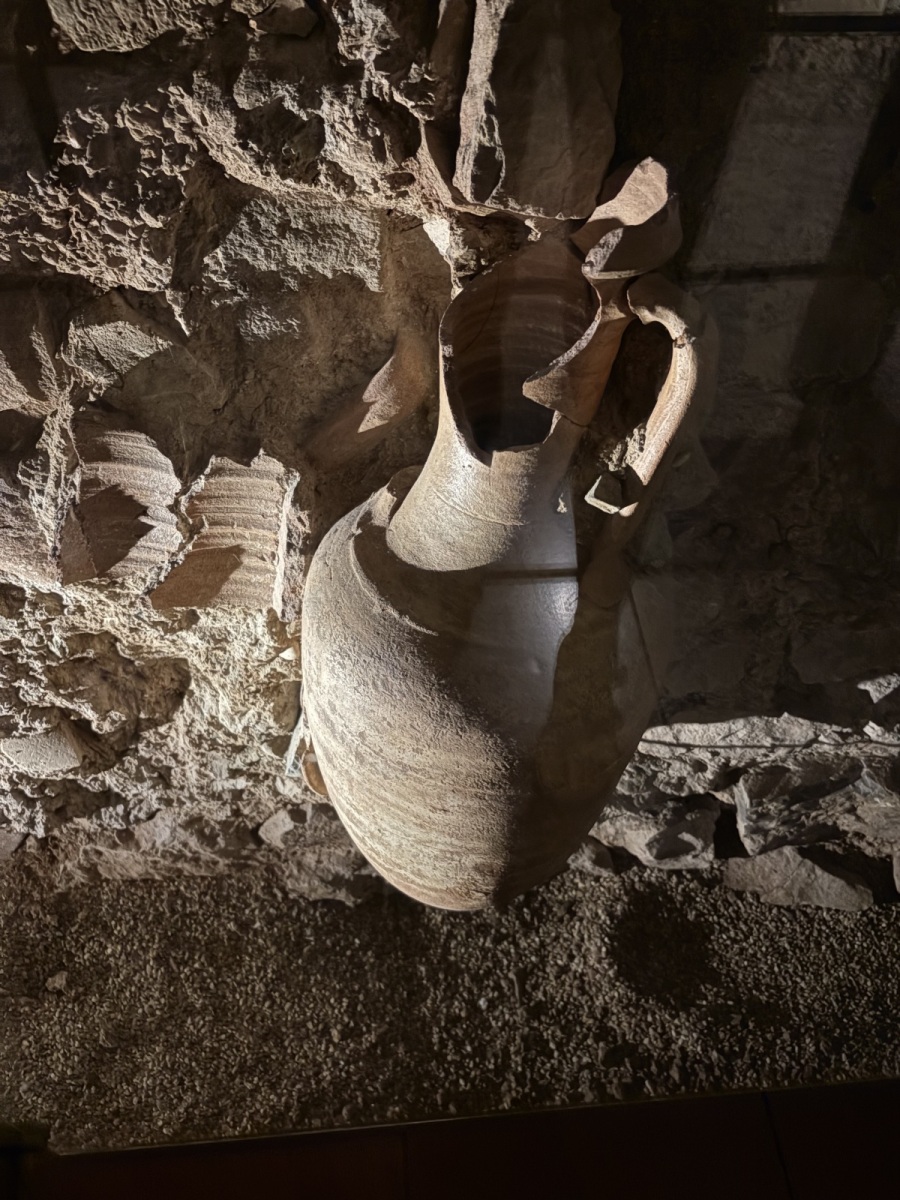
The museum also boasted an archaeological section on the sub level where you could tour the Phoenician ruins that the building sits on top of. Some of the pottery was incredibly well preserved, despite being from the 1st or 2nd millennium B.C.E.

Phoenician Vase

Image 1 of 1

Photo Credit: Sydney

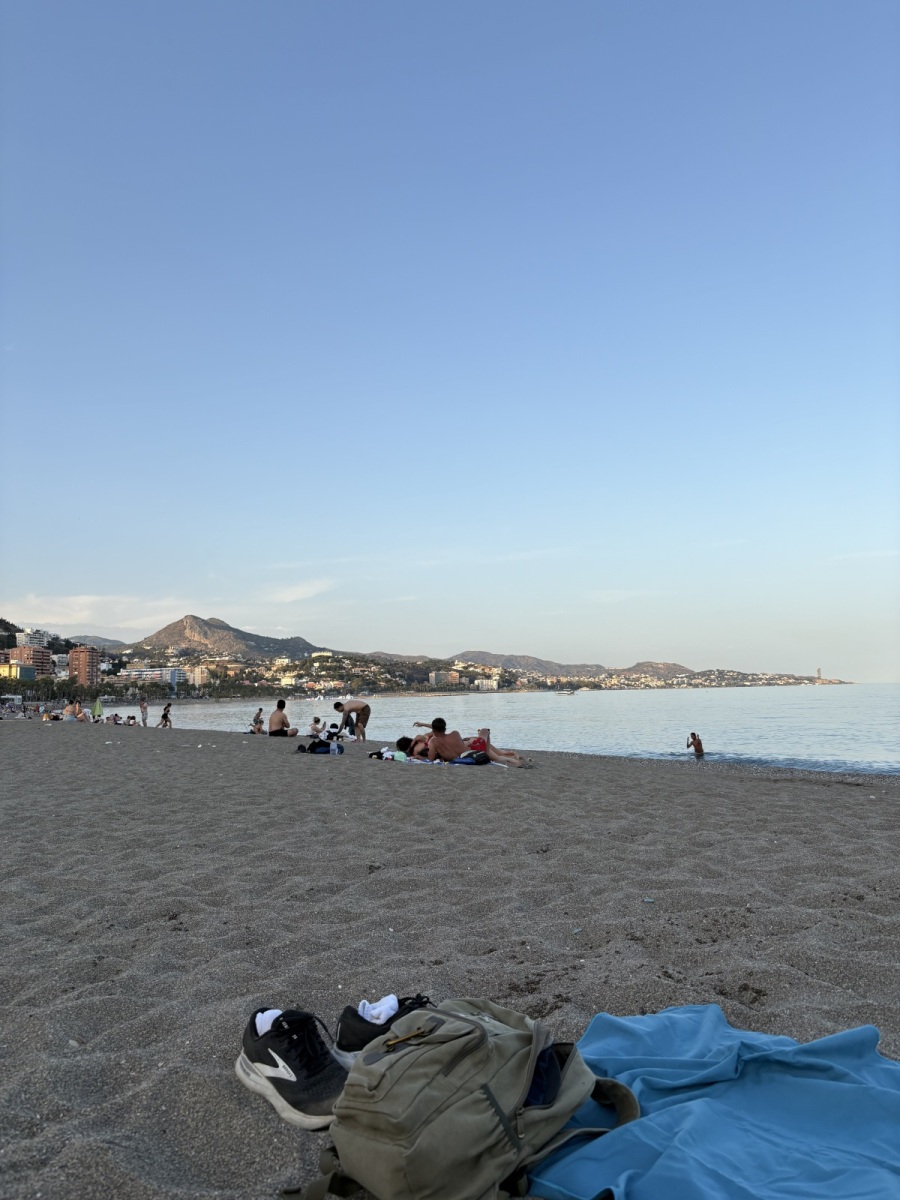
After the museum, we were free for the evening. I made my way to the beach with Paulina, Jemma, and Carson for a relaxing swim. Malaga is nestled in a cove on the Alboran Sea, which opens into the Mediterranean. This made for stunning views of both crystal water and the Montes de Malaga, which make up the mountain range nearest the city. Tune in tomorrow for our trip around the Strait of Gibraltar! 

The Beach in Malaga

Image 1 of 2

Photo Credit: Sydney

Comments are closed.