Friday, May 23, 2025

Blogger, Kacie Lennon

Traveling South — From Madrid to Sevilla

Daily Highlights:

  • Morning Departure from Madrid
  • Train journey to Sevilla (~3 hours)
  • Personal work: presentation and leisure reading
  • Arrival and check-in at the hotel in Sevilla
  • Visit to the Royal Alcazar of Sevilla with a presentation from Syd
  • Encountered a Greek Orthodox procession
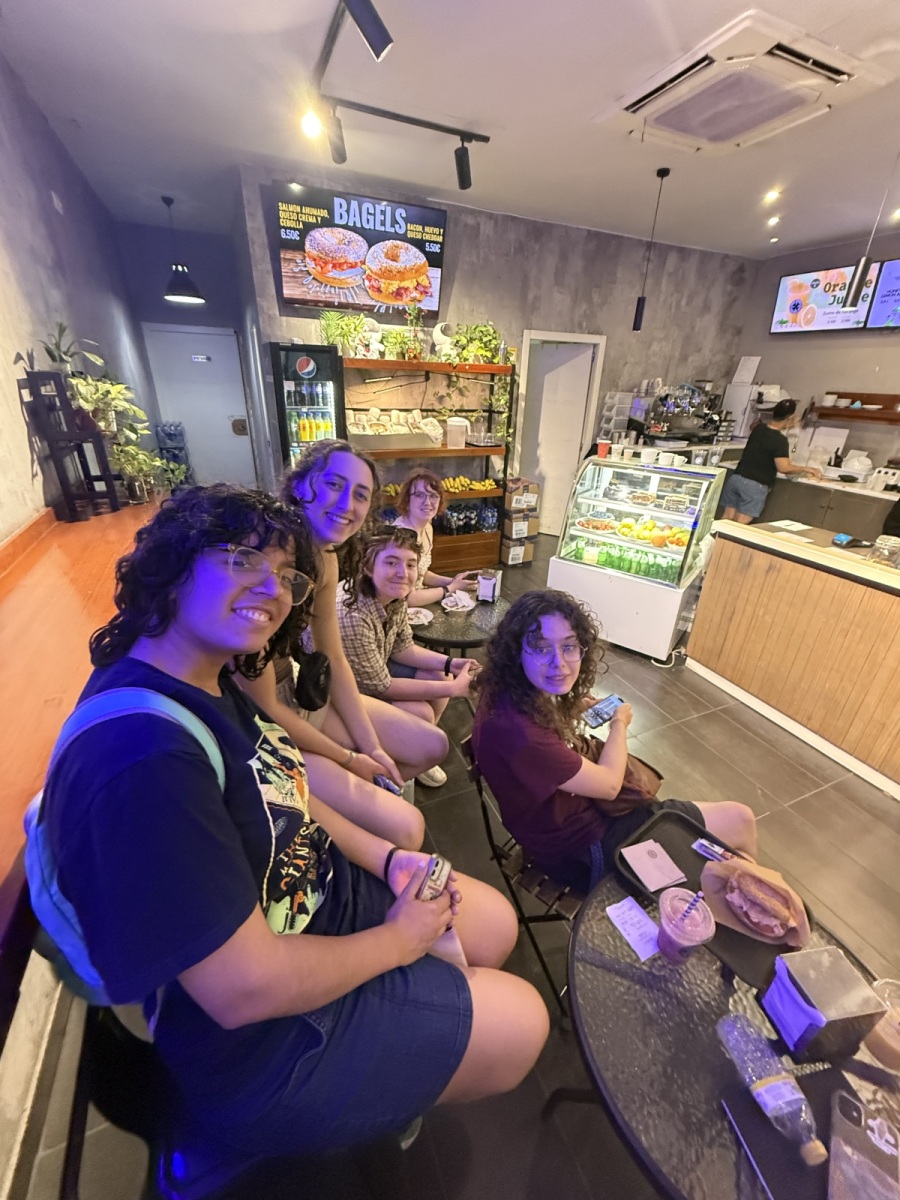
  • Dinner at Holy Roll
  • Evening visit to Metropol Parosol

Leaving Madrid

Today marked a major shift in our itinerary as we checked out of our first hotel in Madrid to travel to Sevilla. We gathered in the hotel lobby at 11:30 am, suitcases in tow, ready to catch our train at Madrid Puerta de Atocha. The ride to Sevilla took about 3 hours—just enough time to dive into some course-related work! I took the opportunity to refine my upcoming presentation on the Puente Romano in Córdoba, focusing on its Roman origins and layered architectural evolution. I also squeezed in a few chapters of Mickey7— a fun sci-fi read I’d recommend so far!
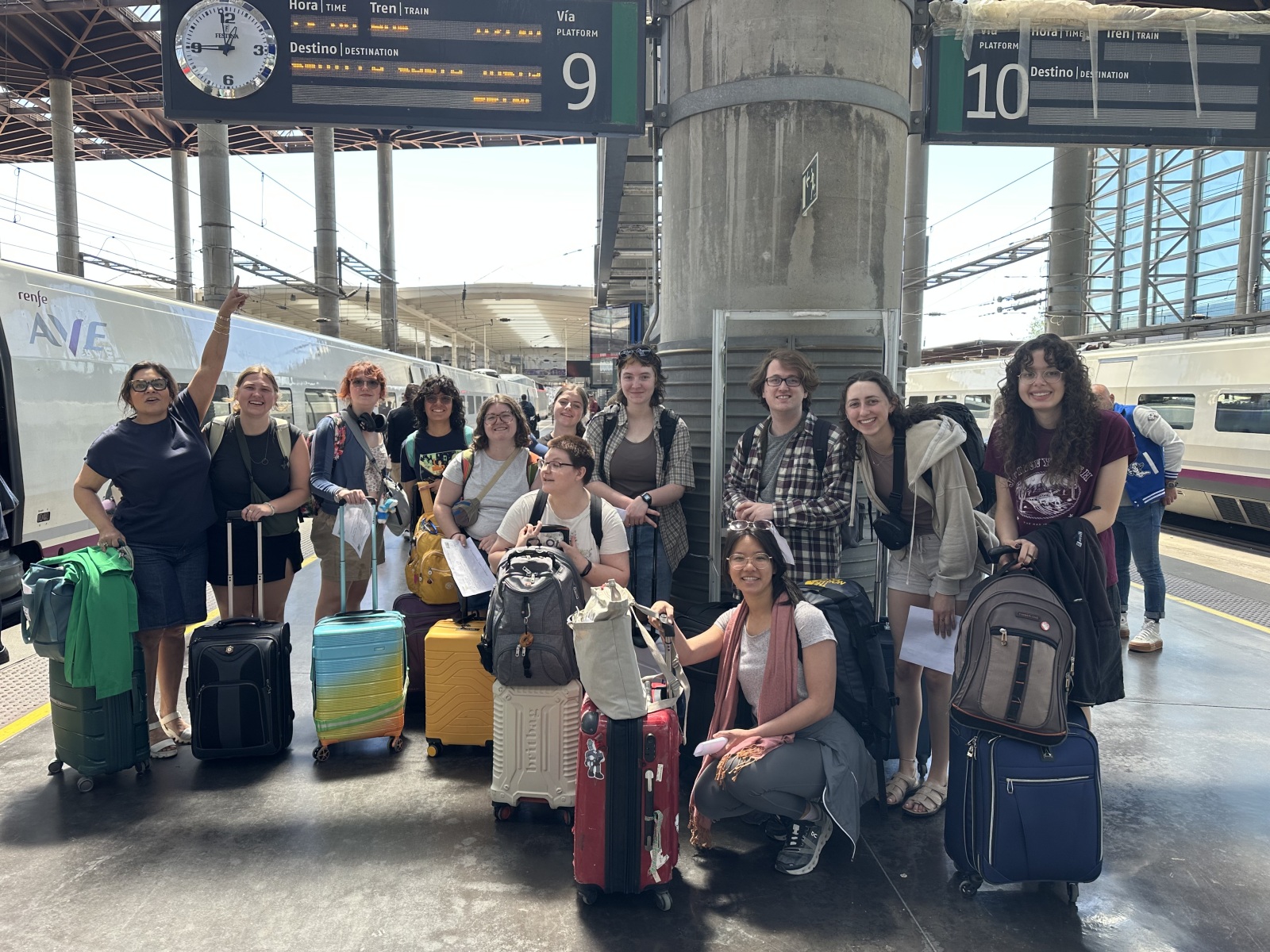
About to Board!

Image 1 of 3

Arrival in Sevilla and a Visit to the Alcázar

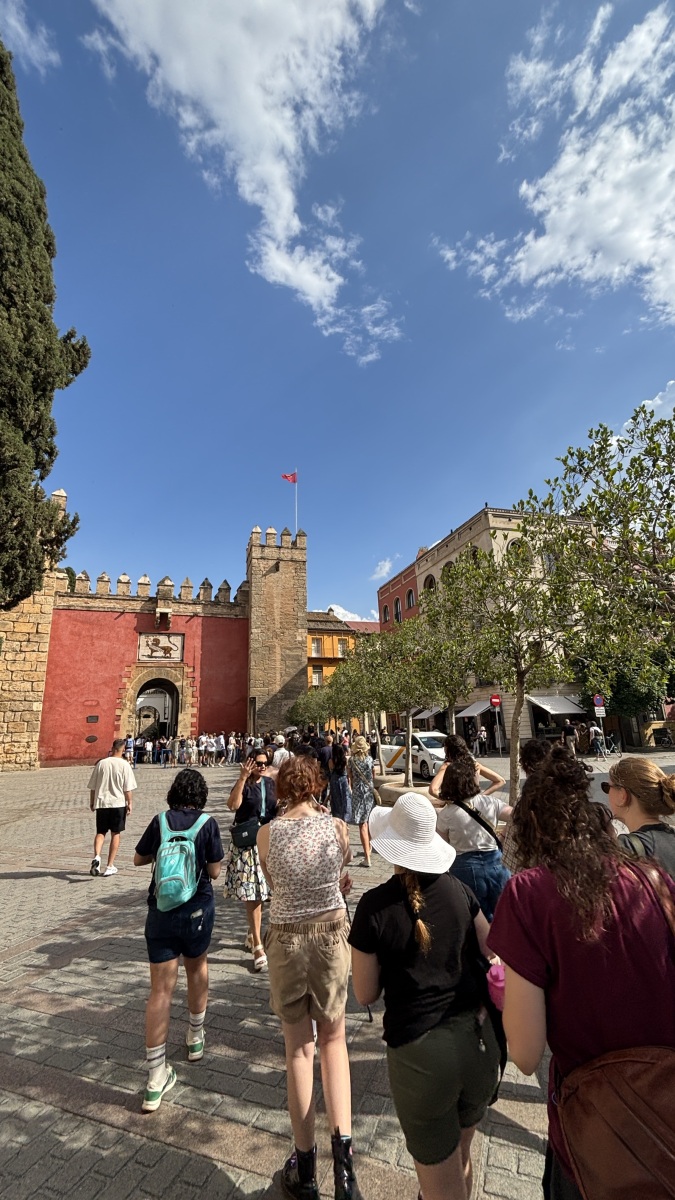
After a short tram ride from the station, we reached our hotel and had an hour to settle in. A few of us grabbed sandwiches at a nearby café before making our way to the Royal Alcázar of Sevilla, where we had a timed entry at 6:30 pm. Sydney opened our visit with a well-researched presentation on the Alcázar’s long history, tracing its origins from a Moorish fort to a royal palace that still hosts Spanish royalty today.

The Alcázar is a remarkable example of Mudéjar architecture, a style that blends Islamic art with Gothic and Christian traditions. The intricate tilework and horseshoe arches all reflected centuries of multicultural craftsmanship. Wandering the palace’s sprawling gardens—filled with citrus trees, fountains, and even a few strutting peacocks—felt like stepping into another era. The gardens were constructed alongside the palace but were expanded and enhanced after the Castilian conquest in 1492, demonstrating how the palace evolved with each ruling dynasty.

Group in the queue, Puerta del Leon, Real Alcazar de Seville

Image 1 of 7

Photo by Wen Ting Ooi

An Unexpected Encounter and Evening Explorations

On our walk back to the hotel, we stumbled across a Greek Orthodox procession winding through the streets. Accompanied by brass instruments, the procession added an unexpected spiritual layer to the evening, demonstrating that even daily city life in Sevilla is saturated with ritual and tradition. 

Dinner brought us to Holy Roll to get smoothies. While we were there, we took the time to admire the Metropol Parasol (commonly known as Las Setas or “The Mushrooms”), a massive contemporary wooden structure located in Plaza de la Encarnación. Designed by architect Jürgen Mayer, it’s one of the largest timber constructions in the world and offers a striking contrast to the surrounding historic buildings. The modern honeycomb pattern serves as a bold architectural gesture—and a unique example of Sevilla’s blend of old and new.

Holy Roll!

Image 2 of 3

Photo by Kacie Lennon

Reflections

Sevilla immediately feels more intimate than Madrid, but no less vibrant. Between the Alcázar’s beauty, the unexpected procession, and the contrast of Las Setas against the city skyline, today was a vivid reminder of how history and modernity continuously coexist in Spain. Some questions I’m left with after today are:

  • How does the Alcázar’s architectural fusion reflect the layered cultural history of Spain—especially the blending of Islamic and Christian influences?
  • What role does preservation play in shaping our experience of historic sites like the Alcázar? Are we seeing the “real” building or a curated version of the past?
  • What impact do modern structures like the Metropol Parasol have on historic cityscapes? Can innovation and tradition truly coexist in public space, or does one inevitably overshadow the other?

I’m especially excited to present in Córdoba tomorrow and to continue uncovering the layers of cultural exchange that define Andalusian history!

Comments are closed.