Visiting a Mosque
Mosques are sacred spaces, and they are communal, for use by both men and women. With mosques, the faithful are divided by sex (male and female are the only two sexes recognized in most mosques) and spend their time in different areas of the mosque while hearing lessons or engaging in private or communal prayer. Part of our course is on cultural heritage, and devotional activities and religious observances are components of different cultures’ cultural heritage. To that end, our goal is to observe and not to disturb the activities of those who are using the space while we are learning.
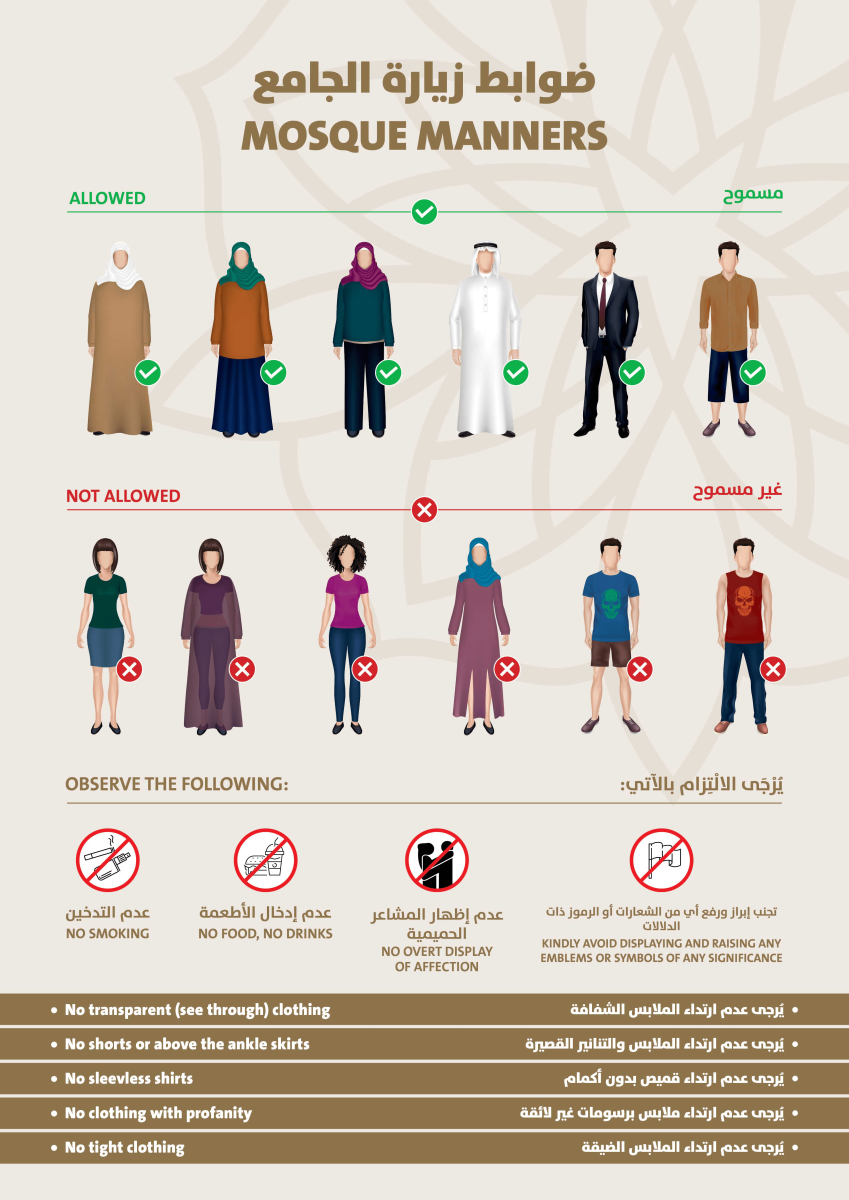
We will be visiting the mosques as guests and students, but will nevertheless be obliged to wear appropriate clothing and exhibit appropriate behavior. That means wearing clothing that is loose-fitting and not tight and form-revealing, especially around the chest and groin areas. Ideally, you will wear something long-sleeved (it can be a light summer cotton material) and long pants or skirts that cover your knees. It is important that you do not show your naked skin around the chest, shoulders, armpits, breasts, stomach, bottom, thighs, or knees. Moreover, women in particular have to cover their heads inside the mosque, which I usually do with a very lightweight cotton scarf that I can take on and off. At many mosques, there are pieces of fabric for visitors to use to cover themselves before they enter, but you might prefer to bring something of your own. We are also required to take off our shoes before we step inside the mosque. There is a slight double-standard for men, who can wear short sleeves, but men must wear long, looser fitting pants.
Graphic or potentially offensive T-shirts with images or messages on them should either not be worn or covered up when inside the mosque or church.
It is late spring / early summer where we will be, and the sun will be stronger and the weather will probably be warmer than what you’re used to. Sometimes I will bring a sarong or wide cotton scarf to wrap around my waist if I am wearing a shorter skirt or shorts, and I will bring a loose-fitting long sleeved shirt that I can easily put on over my t-shirt, etc., while inside the mosque and then remove when we’re back outside. There are lots of places to buy lightweight scarves in both Spain and Turkey if you want to shop for one there, too!
Visiting a Church
Many of the same things that were said above regarding mosques may also be said of churches, with a few differences. Usually you should take off any hats you wear inside a church, and this includes both men and women. Moreover, you do not (and should not) remove your shoes inside a church. Flip flops cannot be worn in churches, but sandals with heel straps are okay, as are sneakers and other types of summer footwear.
Here are some pictures and illustrations that I found on the internet that can help clarify what is allowed and what is forbidden. These are actual signs that are published at the front doors of mosques and churches in the Mediterranean region.